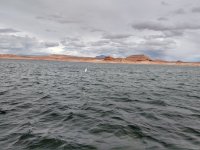
John, you are right on the mark. If you look at the 28 reservoirs that are in the upper Colorado drainage system, it's going to take quite a bit to fill before there is a significant release. In talking to the water resource people in the Vallecito and Lemon reservoir drainages, we are looking good, but a lot of the snow pack will go to replenishing the reservoirs and also the ground water profiles for the irrigation season. But it is interesting to note that Navajo came up .25 ft. in 1 day already! Us farmers are happy after last year's scenario. And praise the Lord it's raining here in Durango right now!!
Good article from Durango Herald from last month about the reservoirs filling up.
Article Link
How much snowpack will make it to reservoirs?
Water managers fear parched soil will soak up significant amount of moisture
By
Jonathan Romeo County & environment reporter
Friday, Feb. 15, 2019 5:07 PM
Updated: Sunday, Feb. 17, 2019 12:06 PM
Follow @jonathandherald
Select Language ▼
▼


Water managers fear the parched landscape will soak up a significant amount of water before it can reach and replenish area reservoirs. Vallecito Reservoir was about 30 percent full Friday.
Durango Herald file
Southwest Colorado’s snowpack is right on track with historic averages, a far cry from last year, but all that potential water may not make it into the region’s needy reservoirs.
A number of different factors could hamper snowpack in the mountains from reaching reservoirs, especially water being soaked up by the parched forest floor.
Southwest Colorado has been feeling the effects of intense drought since fall 2017.
The region received about half the amount of snow it usually does during the 2017-18 winter season. Then, rains failed to show up in spring and summer, leading to the second lowest water year for the region in recorded history.
That has resulted in low levels in area reservoirs. As of Friday, for instance, Vallecito Reservoir was about 30 percent full, and Lemon Reservoir, farther to the west, sat at about 17 percent capacity.
For water managers, it has been a welcome sight to see storm after storm deliver snow this winter. As a result, snowpack in the
Animas, Dolores, San Juan and San Miguel basins is at 114 percent.
But water managers are taking the season’s snow in stride.
It is positive that the parched earth will receive much-needed moisture, but the low soil moisture content means much of that water won’t make it to reservoirs. The soil acts like a sponge.
“Soil moisture is really the big kicker this year,” said Susan Behery, a hydraulic engineer with the Bureau of Reclamation’s office in Durango.
Attempts to reach the Colorado River Basin Forecast Center, which forecasts spring runoff, were unsuccessful Thursday and Friday.
Becky Bollinger, a research associate with the
Colorado Climate Center, said in a conference call to reporters Thursday that despite strong snowpack in the Colorado River Basin, the center predicts lower-than-average levels in water supplies.
The reason: Again, it comes back to soil moisture.
“It will be a critical piece in the spring,” Bollinger said. “But there might be some uncertainty as to how critical.”
It’s difficult to predict how much moisture the soil will soak up. But, it is an issue that has water managers holding out hope for more snow.
Ken Beck with the Pine River Irrigation District, which manages Vallecito Reservoir, said it will likely take snowpack reaching 130 to 150 percent of average levels to get the 125,400-acre-foot reservoir full again.
“We’re not out of the woods yet,” Beck said. “I don’t mean to seem pessimistic because we’re excited, but we want to be cautious because we have a long ways to go to fill it.”
Beck said other factors also cause water losses to reservoirs, such as desert dust deposited on snowpack during wind storms causing water to evaporate and runoff to occur earlier than normal. Wind itself can also cause water loss, Beck said, pulling the moisture out of the soil and dehydrating it.
As of Thursday, the
U.S. Drought Monitor delisted nearly all of Southwest Colorado from the “exceptional drought” category, the center’s highest level. The region remains in the “extreme drought” category.
jromeo@durangoherald.com


 , below is
  . The last time we saw a