
You are using an out of date browser. It may not display this or other websites correctly.
You should upgrade or use an alternative browser.
You should upgrade or use an alternative browser.
How much do we expect the lake to rise this spring/summer
- Thread starter doc
- Start date
- Status
- Not open for further replies.
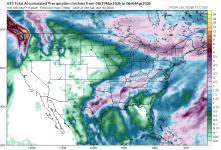

JFRCalifornia
Keeper of San Juan Secrets
Here's a quick update based on the recently released March 24-Month Study. USBR is now projecting the most probable outcome for the lake will be at the end of each month:
Apr - 3526
May - 3526
Jun - 3524
Jul - 3514
Aug - 3504
Sep - 3497
Grim. That assumes they do not alter their current release schedule through Glen Canyon Dam, nor alter the releases from upstream reservoirs. Now here's what happens if USBR reduces releases for the remaining months in WY26 such that they never exceed 500 kaf in any given month. If they did that, the total release for WY26 would be 6.12 maf. This would be the result at the end of each month:
Apr - 3526
May - 3528
Jun - 3531
Jul - 3528
Aug - 3526
Sep - 3523
Not great, but manageable, and maintains access without major modifications.
Now what about releasing more from Flaming Gorge? Right now, USBR is planning to release about 442 kaf from that reservoir from April through September (end of water year). That keeps FG more or less stable. But let's say that was increased by 50%, or about 220 kaf more... which is about 37,000 af/month for 6 months. Would that make a difference to Powell? Yes, but it would be really small--about a foot higher in any given month. Here's what you'd end up with if USBR did that AND reduced releases from GCD as described above:
Apr - 3527
May - 3529
Jun - 3532
Jul - 3529
Aug - 3527
Sep - 3524
So it really boils to how USBR will manage releases through GCD in the coming months, not really how much might be released from the upper reservoirs to Powell...
Apr - 3526
May - 3526
Jun - 3524
Jul - 3514
Aug - 3504
Sep - 3497
Grim. That assumes they do not alter their current release schedule through Glen Canyon Dam, nor alter the releases from upstream reservoirs. Now here's what happens if USBR reduces releases for the remaining months in WY26 such that they never exceed 500 kaf in any given month. If they did that, the total release for WY26 would be 6.12 maf. This would be the result at the end of each month:
Apr - 3526
May - 3528
Jun - 3531
Jul - 3528
Aug - 3526
Sep - 3523
Not great, but manageable, and maintains access without major modifications.
Now what about releasing more from Flaming Gorge? Right now, USBR is planning to release about 442 kaf from that reservoir from April through September (end of water year). That keeps FG more or less stable. But let's say that was increased by 50%, or about 220 kaf more... which is about 37,000 af/month for 6 months. Would that make a difference to Powell? Yes, but it would be really small--about a foot higher in any given month. Here's what you'd end up with if USBR did that AND reduced releases from GCD as described above:
Apr - 3527
May - 3529
Jun - 3532
Jul - 3529
Aug - 3527
Sep - 3524
So it really boils to how USBR will manage releases through GCD in the coming months, not really how much might be released from the upper reservoirs to Powell...

ndscott50
Well-Known Member
Thanks for the updated numbers JFR. I believe the March 24 month study was based on the CBRFC March 1 inflow forecast of 2.3 maf of April to July inflow. The March 15 number took that down to 1.75 maf. If I look at the current number and add in the forecasted precipitation over the next two weeks we are all the way down to 1.581 MAF. Based on the current weather and outlook I would bet pretty heavily they we don't even see the 1.5. I fear that the 2002 record low is in play but for sake of argument lets call it a million less than the March 1 number. So 1.3 maf of inflow. Given that number, if BOR goes with the reduced outflow and Flaming Gorge release, are they still able to keep the lake above minimum power pool until next spring?
JFRCalifornia
Keeper of San Juan Secrets
Well... you're describing what I'd call a realistic worst case scenario. if the April-July inflow turns out to be only 1.3 maf instead of 2.3 maf, here's what would happen if USBR does not alter their current release schedule (figures are for the end of each month shown):Thanks for the updated numbers JFR. I believe the March 24 month study was based on the CBRFC March 1 inflow forecast of 2.3 maf of April to July inflow. The March 15 number took that down to 1.75 maf. If I look at the current number and add in the forecasted precipitation over the next two weeks we are all the way down to 1.581 MAF. Based on the current weather and outlook I would bet pretty heavily they we don't even see the 1.5. I fear that the 2002 record low is in play but for sake of argument lets call it a million less than the March 1 number. So 1.3 maf of inflow. Given that number, if BOR goes with the reduced outflow and Flaming Gorge release, are they still able to keep the lake above minimum power pool until next spring?
Jul 2026 - 3495
Sep 2026 - 3475
Mar 2027 - 3450
Those are not typos.
Okay, say they reduce outflow through GCD as I described previously--no more than 500 kaf/month through September, a total of 6.12 maf for WY26. Here's the result:
Jul 2026 - 3510
Sep 2026 - 3504
Mar 2027 - 3483
Bumping up the FG releases might buy you a foot or two extra on each figure, nothing huge. So if your doomsday scenario of 1.3 maf inflow from April-July really happens, I don't see any way Lake Powell doesn't drop to below minimum power pool over the winter, even by minimizing releases through Glen Canyon Dam... unless they really almost stopped releases (reduce to 1000 cfs, as they did in much of 1963 and summer 1964)... which would have a massive impact on Lake Mead.... I haven't run those numbers, but I will later....
There's no perfect solution here...
I'll double check the math, or someone else can, but that's what I'm coming up with...
Last edited:
upthecreek
Well-Known Member
So the houseboats that are on the water are likely to stay there. And the ones that are on land are yard art.

doc
Well-Known Member
So, is USBR planning on decreasing releases starting in a couple of wks? And what is the lowest the lake got back in 2022 and 2023? fHere's a quick update based on the recently released March 24-Month Study. USBR is now projecting the most probable outcome for the lake will be at the end of each month:
Apr - 3526
May - 3526
Jun - 3524
Jul - 3514
Aug - 3504
Sep - 3497
Grim. That assumes they do not alter their current release schedule through Glen Canyon Dam, nor alter the releases from upstream reservoirs. Now here's what happens if USBR reduces releases for the remaining months in WY26 such that they never exceed 500 kaf in any given month. If they did that, the total release for WY26 would be 6.12 maf. This would be the result at the end of each month:
Apr - 3526
May - 3528
Jun - 3531
Jul - 3528
Aug - 3526
Sep - 3523
Not great, but manageable, and maintains access without major modifications.
Now what about releasing more from Flaming Gorge? Right now, USBR is planning to release about 442 kaf from that reservoir from April through September (end of water year). That keeps FG more or less stable. But let's say that was increased by 50%, or about 220 kaf more... which is about 37,000 af/month for 6 months. Would that make a difference to Powell? Yes, but it would be really small--about a foot higher in any given month. Here's what you'd end up with if USBR did that AND reduced releases from GCD as described above:
Apr - 3527
May - 3529
Jun - 3532
Jul - 3529
Aug - 3527
Sep - 3524
So it really boils to how USBR will manage releases through GCD in the coming months, not really how much might be released from the upper reservoirs to Powell...
At this point it’s important to realize 1300 kaf is not “worst case” by any means. The CBFRC forecast including GEFS model is 1195 kaf for 70% exceedance as of today.
In other words, the forecast is that there is a 30% chance we get less than 1195 kaf.
And there is a 10% chance we get less than 479 kaf. That’s also not a typo.
With JFR’s elevations for 1300 kaf it is easy to understand why NPS is rapidly reconfiguring the marinas. There is a very real chance things get bad very quickly this summer even if BoR adjusts outflows.
On the upper end the 30% exceedance is only 2070 kaf, so even wetter than climatology still leaves the lake in a pretty bad spot. And 10% exceedance is 3233 kaf - which at this point would be a godsend despite normally being a “bad” runoff!
In other words, the forecast is that there is a 30% chance we get less than 1195 kaf.
And there is a 10% chance we get less than 479 kaf. That’s also not a typo.
With JFR’s elevations for 1300 kaf it is easy to understand why NPS is rapidly reconfiguring the marinas. There is a very real chance things get bad very quickly this summer even if BoR adjusts outflows.
On the upper end the 30% exceedance is only 2070 kaf, so even wetter than climatology still leaves the lake in a pretty bad spot. And 10% exceedance is 3233 kaf - which at this point would be a godsend despite normally being a “bad” runoff!
The snowpack numbers on the Water Database site haven’t updated in about a week. Anyone know if that’s a problem with the website or with the incoming numbers? The site also is getting worse and worse at loading.
You can just go to the source data here:
https://nwcc-apps.sc.egov.usda.gov/awdb/basin-plots/POR/WTEQ/assocHUC2/14_Upper_Colorado_Region.html
That’s being updated daily still. It isn’t pretty:
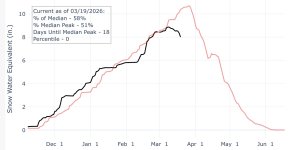
The black line is current year. The red line is the minimum ever measured on a given day. We are way below that and dropping fast. Welcome to a “Percentile - 0” spring…
So, is USBR planning on decreasing releases starting in a couple of wks? And what is the lowest the lake got back in 2022 and 2023? f
I don’t think anyone knows exactly when USBR will reduce releases, but they’ve stated they will do everything they can to maintain 3500 to keep a bit of a buffer above min power pool at 3490. In the past they even said they’d try to protect at 3525, but their recent models/studies that account for drought operational changes presently seem to be set at 3500 instead.
I would think given the current state of things they need to cut the tap by May at the latest. They can reduce total water year release to 6 Maf and JFR has done some of his usual great posts showing they can just about do that cutting over the summer.
The lowest the lake got recently was a bit above 3519 in April of 2023.

A man called horse
Active Member
Without Flaming Gorge its a drawdown to deadpool. At least thats what Im surmising.
Planning on a trip up there this year. Hope there is enough left in FG to offer the trip of a lifetime.
Planning on a trip up there this year. Hope there is enough left in FG to offer the trip of a lifetime.
ndscott50
Well-Known Member
The good news (not that its really that good) on the crazy low number is that it likely not possible for the actual regulated inflow to go that low. 479 kaf would equate to an average flow rate into Powell of just 2,000 cfs from April to July. The current inflow is around 5,000 cfs. Mandatory minimum releases from upstream dams, inflows from natural springs and even limited precipitation in the basin are going to keep it a good deal above that. Of course as the numbers show even if we get 1.3 maf of inflow its still really bad.And there is a 10% chance we get less than 479 kaf. That’s also not a typo.
At this point the words of the late great Bill Paxton come to mind.....
Colorado Expat
Well-Known Member
Given the current long-term forecasts, it appears that we have at this point likely passed our peak snow pack accumulation for the current water year. That leaves us with a discouragingly small amount of water capital in the bank. The big question now is how we choose to spend it.
WillTurman
Member
I was able to snag the forecast data that is used in the chart from the Colorado River Basin Forecast Center that DVexile posted.
Already having much of the work done while projecting previous years' unregulated inflow trajectories forward, I was able to project the inflows from the CRBFC forecast(s) forward to show Lake Powell elevations at the various forecast thresholds.
The CRBFC forecasts are for unregulated inflows from April 1 to July 31 of the upcoming season, so I bridged today's elevation/storage forward to April 1 and drew the projections from that point forward. Releases are currently outpacing inflows by a so I'd expect a bit of a downward correction as we approach April 1.
Changing the release regimes has a significant effect on the rapidity of storage loss. My understanding is that 6.0 MAF is the lowest possible volume they'd release this year. It's interesting to play around with release scenarios. What's 2.0 MAF between friends?
Here's the chart if you'd like to check it out:
Lake Powell Storage Projections - CBRFC Forecast
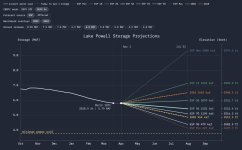
Getting back to the topic of this thread, I think this is literally the best I can do as far as answering the question .
.
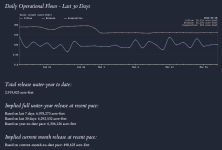
Here's some additional context with recent Glen Canyon Dam operation and projected annual release volumes from recent releases.
Already having much of the work done while projecting previous years' unregulated inflow trajectories forward, I was able to project the inflows from the CRBFC forecast(s) forward to show Lake Powell elevations at the various forecast thresholds.
The CRBFC forecasts are for unregulated inflows from April 1 to July 31 of the upcoming season, so I bridged today's elevation/storage forward to April 1 and drew the projections from that point forward. Releases are currently outpacing inflows by a so I'd expect a bit of a downward correction as we approach April 1.
Changing the release regimes has a significant effect on the rapidity of storage loss. My understanding is that 6.0 MAF is the lowest possible volume they'd release this year. It's interesting to play around with release scenarios. What's 2.0 MAF between friends?
Here's the chart if you'd like to check it out:
Lake Powell Storage Projections - CBRFC Forecast
Getting back to the topic of this thread, I think this is literally the best I can do as far as answering the question
. Here's some additional context with recent Glen Canyon Dam operation and projected annual release volumes from recent releases.
The water level got down to 3,522.24' on 4/22/2022, and 3,519.92' on 4/15/2023. The lower level in 2023 wasn't as scary since there was a massive snowpack in the mountains waiting to come down.So, is USBR planning on decreasing releases starting in a couple of wks? And what is the lowest the lake got back in 2022 and 2023? f
My speculative prediction is that the BoR will cut releases as low as needed to maintain at least 3,500' of elevation to have some level of power generation without damaging the turbines.
(Somewhat speculative assertions
If they need to use the outlet works (for elevations below 3,490') they risk major damage to them from the high velocity water, with no easy way of repairing them other than shutting them down one by one, or shutting them down completely until the water level rises high enough to use the turbines again. There is no feasible way to release water with that much hydraulic head behind it without dissipating that power, which is usually done through the power turbines.
POk3s
Escalante-Class Member
living 15 miles from Flaming Gorge I really hate these talks.
I understand this site is all lake Powell, all the time but I simply hate when my home lake is talked about like the sacrificial lamb. It’s doomsday on both ends, it seems. And then God forbid we have another bad winter next year. I guess we’ll keep those thoughts for another time.
Regardless, without going and rechecking the numbers and going into how accurate this is, the last time we had a draw down it was basically 1 foot in flaming gorge for 1 inch in lake Powell. Draw down the Gorge 12 feet for a foot of rise in Powell. You have to wonder where the powers to be have their thought process.
Of course, I understand how reservoirs work and how this might be needed. It’s just tough to stomach seeing “hey let’s just take more from flaming gorge”, and then watching my home lake drain, watching the fishing and recreation suffer there for a drop in the bucket to lake Powell. Not to mention the obvious, you send it down to a sandstone lake that’s really hot instead of keeping it in a cooler lake, upstream. Once it’s gone, it’s gone.
I understand this site is all lake Powell, all the time but I simply hate when my home lake is talked about like the sacrificial lamb. It’s doomsday on both ends, it seems. And then God forbid we have another bad winter next year. I guess we’ll keep those thoughts for another time.
Regardless, without going and rechecking the numbers and going into how accurate this is, the last time we had a draw down it was basically 1 foot in flaming gorge for 1 inch in lake Powell. Draw down the Gorge 12 feet for a foot of rise in Powell. You have to wonder where the powers to be have their thought process.
Of course, I understand how reservoirs work and how this might be needed. It’s just tough to stomach seeing “hey let’s just take more from flaming gorge”, and then watching my home lake drain, watching the fishing and recreation suffer there for a drop in the bucket to lake Powell. Not to mention the obvious, you send it down to a sandstone lake that’s really hot instead of keeping it in a cooler lake, upstream. Once it’s gone, it’s gone.
upthecreek
Well-Known Member
I agree. Mention of how hard it will be for Mead if sacrifices aren't made upstream kind leaves a bad taste. Kicking the can up the road, as it were.
I asked this question on page 2 of this thread and got some good responses. Basically, it wouldn't be that big of a deal. Inconvenient, but not a big problem.I wonder what the implications are of zero power generation at GCD? This would be interesting to know, it would provide a lot of insight into how far the BOR will go to keep water moving through the turbines.
ndscott50
Well-Known Member
From what I have seen the loss of the generation is manageable from a keep the lights on perspective. There is enough spare capacity to make up the difference. Financially it creates issues but the bigger concern is likely related to the operation of the dam itself and the risk created by only having the bypass tubes to release water for a long period of time.I wonder what the implications are of zero power generation at GCD? This would be interesting to know, it would provide a lot of insight into how far the BOR will go to keep water moving through the turbines.
I took a look at some of the snotel sites to see how the heatwave is progressing. A site at 11,500 in the San Juans has already lost over an inch of SWE in the last 48 hours. Last night the low only dropped to 31.5 (it was below freezing for two hours) and its already 56 at 11am. The melt is only going to accelerate for the next 48 hours.
- Status
- Not open for further replies.