
You are using an out of date browser. It may not display this or other websites correctly.
You should upgrade or use an alternative browser.
You should upgrade or use an alternative browser.
Walleyes at Lake Powell
- Thread starter becattron
- Start date
- Status
- Not open for further replies.


POk3s
Escalante-Class Member
I have never understood it. It seems utah is in love with their sterile fish. Why wouldn’t you want some natural reproduction in the lakes. Between tiger trout, sterile walleyes, and wipers, they sure are dumping a lot of money into each and every system to keep it going. More than one occasion they took walleye out to replace them with sterile walleye. It seems rifle liked that model???

Mr Jimmy
Well-Known Member
I think the moral of the story is there wouldn't be any walleye in Powell if they hadn't escaped from " most likely " Rifle Gap.
Heads up ! Nearby Harvey Gap is getting some really healthy Largemouth and Pike.
They shocked a lot of the perch out of there, and moved hundreds of them elsewhere.
These irrigation lakes seem to cycle through good times, bad times as to being a healthy fishery.
Heads up ! Nearby Harvey Gap is getting some really healthy Largemouth and Pike.
They shocked a lot of the perch out of there, and moved hundreds of them elsewhere.
These irrigation lakes seem to cycle through good times, bad times as to being a healthy fishery.

PBH
Well-Known Member
Why wouldn’t you want some natural reproduction in the lakes.
The key word in your question is: SOME
If it were possible to get some production, but keep it controlled, then that would be ideal. The problem with walleye, specifically in Utah, is that the spawning environment is too good. That's where we need some natural systems in play to control the reproduction -- that's where those systems in the mid west have a big advantage over systems in the west, like Utah.
It's no different with trout. Have you ever heard of an over populated cutthroat trout fishery in Utah? Why not? In most places, cutthroat trout spawning habitat is limited. They evolved here with these limitations in place, which kept their populations in check. Brook trout, on the other hand, are not native. In most mountain streams in Utah, brook trout become a problem because they are "better" at reproducing, which causes issues because they quickly overpopulate and stunt. Think about brook trout fisheries on Boulder Mountain, and what makes a "trophy" brook trout fishery vs. a stunted fishery. What's the difference? Winterkill. The lakes that experience occasional winterkills are the lakes that produce trophy brook trout. The lakes that over-winter fish every year result in stunted brook trout populations. It's those lakes that triploid brook trout, or even tiger trout and cutthoat trout, are the desired species.
the money spent on utilizing those hybrids (or triploids) is a cost savings vs. the money required to manage the same fisheries without the hybrids or triploids. Think about Minersville Reservoir. They use wipers there to control the chub population. Without the wipers, the chub population grows uncontrollably. The cutthroat, rainbows, brown trout, tiger trout, and smb simply cannot keep up the chubs, and the chubs out-compete everything else taking over the lake. Wipers have proven effective in controlling chubs. If eliminating chubs 100% was desired, you could probably do it by stocking the hell out of the lake with wipers. But, like you mentioned, some chubs are desirable. So they stock enough wipers to control the chubs, but not too many to wipe them out. The alternative to wipers would be rotenone -- which is a much more costly solution than raising wipers in the hatchery.
So, again, they key word is SOME. If "some" is possible, then that would be good. Unfortunately, we don't usually get some, but rather we get too much. Those cycles of booms and crashes would "level out" if there was some control over the reproduction of species like perch, bass, walleye, pike....

RandyAustinFishing
Well-Known Member
The wipers at Minersville and Newcastle have been fun but the 4 and 5 pound smallies, before the wiper plantings were more fun IMO. I am gonna try to go get a muskie and tiger trout at Navajo.
RandyAustinFishing
Well-Known Member
$$$ Hatchery money.I have never understood it. It seems utah is in love with their sterile fish. Why wouldn’t you want some natural reproduction in the lakes. Between tiger trout, sterile walleyes, and wipers, they sure are dumping a lot of money into each and every system to keep it going. More than one occasion they took walleye out to replace them with sterile walleye. It seems rifle liked that model???
POk3s
Escalante-Class Member
I guess it can make sense if you don’t really think about it.The key word in your question is: SOME
If it were possible to get some production, but keep it controlled, then that would be ideal. The problem with walleye, specifically in Utah, is that the spawning environment is too good. That's where we need some natural systems in play to control the reproduction -- that's where those systems in the mid west have a big advantage over systems in the west, like Utah.
It's no different with trout. Have you ever heard of an over populated cutthroat trout fishery in Utah? Why not? In most places, cutthroat trout spawning habitat is limited. They evolved here with these limitations in place, which kept their populations in check. Brook trout, on the other hand, are not native. In most mountain streams in Utah, brook trout become a problem because they are "better" at reproducing, which causes issues because they quickly overpopulate and stunt. Think about brook trout fisheries on Boulder Mountain, and what makes a "trophy" brook trout fishery vs. a stunted fishery. What's the difference? Winterkill. The lakes that experience occasional winterkills are the lakes that produce trophy brook trout. The lakes that over-winter fish every year result in stunted brook trout populations. It's those lakes that triploid brook trout, or even tiger trout and cutthoat trout, are the desired species.
the money spent on utilizing those hybrids (or triploids) is a cost savings vs. the money required to manage the same fisheries without the hybrids or triploids. Think about Minersville Reservoir. They use wipers there to control the chub population. Without the wipers, the chub population grows uncontrollably. The cutthroat, rainbows, brown trout, tiger trout, and smb simply cannot keep up the chubs, and the chubs out-compete everything else taking over the lake. Wipers have proven effective in controlling chubs. If eliminating chubs 100% was desired, you could probably do it by stocking the hell out of the lake with wipers. But, like you mentioned, some chubs are desirable. So they stock enough wipers to control the chubs, but not too many to wipe them out. The alternative to wipers would be rotenone -- which is a much more costly solution than raising wipers in the hatchery.
So, again, they key word is SOME. If "some" is possible, then that would be good. Unfortunately, we don't usually get some, but rather we get too much. Those cycles of booms and crashes would "level out" if there was some control over the reproduction of species like perch, bass, walleye, pike....
Sorry PBH but I’m not buying it. Maybe I’m hard headed but every conservation model I trust has hunters and fishermen controlling the population. To spend money to take out walleye that could spawn, to spend money to raise and stock walleye that can’t spawn because people so badly want walleye in the system. If it gets overpopulated and stunted begins what means “we” can all do, then maybe it’s time to step in and spend some money.
I’m sure there is plenty my simple brain can not understand and maybe this subject is one of them but I just shake my head when I read what kind of fish are in most of Utah’s reservoirs.

Meatwagon
Keeper of San Juan Secrets
Found in Lake Powell, Saguaro Lake, Canyon Lake, Apache Lake, Upper Lake Mary, Show Low Lake and Fool Hollow Lake.Are there walleye in Roosevelt? I just bought property about 10 miles from the north ramp, I’ve just heard about the crappie and bass, haven’t fished it yet
This is copied from azgfd website.
upthecreek
Well-Known Member
From Waynes earlier postI think the moral of the story is there wouldn't be any walleye in Powell if they hadn't escaped from " most likely " Rifle Gap.
101
WALLEYE
Introduction:
Walleye were present in the Colorado River before the impoundment of Lake Powell behind the Glen
Canyon Dam. The early population was slow to develop but after the introduction of Threadfin Shad in
1968 the population began to flourish (Hepworth and Gloss 1976)

becattron
Member
Going to the north end of the lake this weekend. Going to start with some trolling work into jig fishing blade baits and rattle traps if that isn’t working I will move into soft plastics possibly some bottom bouncing with a harness.
Has anyone every fished the San Juan arm for walleye? I was thinking about running down that way because I’ve always wanted to fish it. I caught 6 walleye last August by rincon but have never went further south than that. Will probably end up in GHB one of the two days because I know I can catch the walleye well up there.
Has anyone every fished the San Juan arm for walleye? I was thinking about running down that way because I’ve always wanted to fish it. I caught 6 walleye last August by rincon but have never went further south than that. Will probably end up in GHB one of the two days because I know I can catch the walleye well up there.

Sawz
Active Member
When I read Wayne's netting reports the San Juan was the lowest Walleye nettedGoing to the north end of the lake this weekend. Going to start with some trolling work into jig fishing blade baits and rattle traps if that isn’t working I will move into soft plastics possibly some bottom bouncing with a harness.
Has anyone every fished the San Juan arm for walleye? I was thinking about running down that way because I’ve always wanted to fish it. I caught 6 walleye last August by rincon but have never went further south than that. Will probably end up in GHB one of the two days because I know I can catch the walleye well up there.

When we had to collect walleye for any reason, we would always go to Good Hope Bay because walleye numbers were always higher in the northern lake than at any other lake location year after year.
When I needed to collect walleye for my table and freezer, I do the same thing.When we had to collect walleye for any reason, we would always go to Good Hope Bay because walleye numbers were always higher in the northern lake than at any other lake location year after year.

Walleye Jon
Member
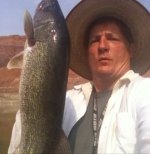
Walleye Jon
Member
Remember to catch and release some
Be the best fisherman we can be at Lake Powell eat as many as you can but don’t be a freezer counter and let them go to waste.
Be the best fisherman we can be at Lake Powell eat as many as you can but don’t be a freezer counter and let them go to waste.

fishfry
Well-Known Member
We just had a fish fry this weekend for about 30 people and cleaned out the freezer. Our oldest packs were from spring of 21’ and everyone loved it. I can’t wait for shore lunch at Powell thisRemember to catch and release some
Be the best fisherman we can be at Lake Powell eat as many as you can but don’t be a freezer counter and let them go to waste.
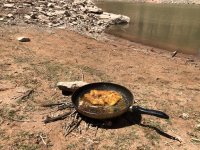 spring!
K&M
Well-Known Member
We did release that one--I agree--only harvest what you will eat!Remember to catch and release some
Be the best fisherman we can be at Lake Powell eat as many as you can but don’t be a freezer counter and let them go to waste.
Walleye Jon
Member
Yes my neighbors can’t wait for when I start walleye fishing each year they seem to know when I have some in the freezer to share .
Stuart Hepworth
Well-Known Member
I guess it can make sense if you don’t really think about it.
Sorry PBH but I’m not buying it. Maybe I’m hard headed but every conservation model I trust has hunters and fishermen controlling the population. To spend money to take out walleye that could spawn, to spend money to raise and stock walleye that can’t spawn because people so badly want walleye in the system. If it gets overpopulated and stunted begins what means “we” can all do, then maybe it’s time to step in and spend some money.
I’m sure there is plenty my simple brain can not understand and maybe this subject is one of them but I just shake my head when I read what kind of fish are in most of Utah’s reservoirs.
It would be great if hunters and fishermen could control the population, but as we have clearly seen at Lake Powell, and despite the best efforts by Wayne over the course of many years, the boom and bust of the striper population and the lack of limits at Powell hasn't been able to control the population. The idea that we can simply step in and spend some money on a fishery the size of Powell to reduce spawning and/or the population is very difficult and very costly at best. Look at the situation at Yellowstone Lake and the lake trout population as an example. Currently, the Feds are gillnetting the known spawning habitat of lake trout to reduce lake trout numbers (and it is working), but it is a strategy that can NEVER be stopped or the lake trout will overpopulate. The same would have to happen on Lake Powell with walleye, stripers, smallmouth bass, and other predators to control the population...you are talking about an exceptionally difficult and costly plan that, again, could never be stopped.
Other examples of the same situation are numerous...I look at the perch situation at Fish Lake--despite the perch having no limit and perch fishing increasing on a seemingly yearly basis, perch numbers remain unaffected. That's because they can reproduce at a rate so high (each female lays between 10,000 and 40,000 eggs each year) that we could never keep up by angler harvest. Undertaking any kind of program (like what is being done at Yellowstone Lake) would be so costly and so time consuming and again NEVER-ending, that is makes it completely inefficient and not feasible.
With the walleye at Powell, a close look at the paper Wayne posted showed K-factors of walley to be less than 1.0 on average. I know that trout and salmonids having a k-factor below 1.0 are considered to be in poor health. I would imagine the same holds true for walleye. This is a tell-tale sign that walleye are not as healthy as they could be and growth rates are probably lower than they should be...the best thing anglers could do to improve the health of walleye, stripers, and smallmouth bass is to harvest all sizes. This is the best available and most efficient resource that fisheries managers have to help control the population.
For more information on stunted fish populations, read this article posted by the American Fisheries Association:
- Status
- Not open for further replies.