The water-data site just goes by current water level and cutoff elevations. Bullfrog is well below the official cutoff, and people are using the spur, which appears to be an old asphalt road dating to the later sixties. I would recommend the NPS site for the best official word (Changing Lake Levels - Glen Canyon National Recreation Area (U.S. National Park Service)). There is also a lot of discussion on this site about it, usually under different threads to keep it interesting. Search for "Bullfrog Ramp" or "Bullfrog Launch" to see the latest contributions. That will also cover recommendations like launching off the right side versus straight off the end, wading in to check for rocks, and so forth.Well...water-data.com says Bullfrog is closed. Who is right?

You are using an out of date browser. It may not display this or other websites correctly.
You should upgrade or use an alternative browser.
You should upgrade or use an alternative browser.
Bullfrog six night trip planning help for HB rookies.
- Thread starter Eric_Cheney
- Start date
- Status
- Not open for further replies.

Eric_Cheney
Member
Fair points. My main concern is about handing the HB including anchoring it properly. Drinking ambient temperature liquids is far down on my list of concerns. The revised plan is to anchor the HB once and use the PB to tour. But that doesn't change the fact I've never done this. This may motivate me to add another person who can be helpful even if they aren't family. Will give this some serious thought in the next few days.6 on a HB is a skeleton crew. 6 rookies with 3 80+, wow, just wow.
I've HB'ed 8 times at Powell over the last 40 years. 1st time with ten rookie 20 somethings 8 male 2 fems. I sure hope someone on the crew has significant boating experience. It's not a house, it's a big underpowered floating box.
So here are just some of the mistakes you will likely make and some of the outcomes. We did them at one point or another.
You won't start looking for an anchorage untill late afternoon. You should have started AT noon (or earlier).
You will choose a marginal spot to anchor since you lack a scout boat, experience, and time (late start).
Your anchors will not be well set due to your marginal spot and your relative lack of manpower. Properly anchoring a HB is hard work and can take the better part of an hour. Note, a 46' boat in a 20mph breeze can exert ~1000lbs on an anchor line. They better be set well.
If the wind blows (it will sooner or later) your anchor/s will pull out. Had it happen AT NIGHT 3 times over the years. It's pretty frightening. Twice we got re-anchored after using the engines to keep from getting blown sideways on the beach. Once we didn't. Barely got the engines shutdown and tilted up in time. Yes, you will think they are set "good enough" and sooner or later you will be wrong.
Nothing like an emergency drill at 2am to get the adrenaline flowing. Amazing nobody even ended up getting hurt. Some sore backs though.
Ok, enough of the scary stuff. Other inconvenient things are.
You won't have enough gas. Ok scratch that. the HB has enough. But, If you do take a runabout you will end up wanting to take it out but won't have enough gas to do so after 2 or 3 days. Oh and you can't get to the back of the canyon where the best hikes are without a runabout or better yet jetskis. It still often requires a swim (often through debris).
You will run out of ice and be drinking warm drinks the last few days and plan on at least one or two meals that don't require refrigeration. Fill the big cooler that come with the boat FULL of blocks of ice and nothing else. Everything that needs to be cold should be cold before it gets loaded onto the HB. More sore backs from hauling coolers. I always take and use a weightlifting belt.
Don't make a detailed itinerary, have a goal or two but be flexible. Monitor/track your fuel use daily. Adjust plans accordingly.
Using a houseboat like a touring bus and moving it every day is a lot of work. Did that on the 1st trip (we were in our 20's then) and never again. Anchoring 3 times in one week is my absolute limit.
Resupply runs in a runabout take 2 to 4 hours depending on how far your are from marina. I hate 'em. The chop is usually bad and you will get tired of being bounced around. Nothing but tiring. Oh and hauling more ice not fun. Fuel cans, not fun either.
Things to take.
Binoculars for reading mileage makings on channel bouys.
First aid kit. We always buy a brand new one for every trip.
Emergency meds. Medical care hours away.
There's lots more.... but it is way late a night now.
Thanks for sharing. It is the anchoring I am most concerned about. So several suggestions on where to look for a good spot would be great as well as being able to point me to materials that detail the process of setting the anchors and lines.September is an amazing time on the lake, don’t let us scare you with our preparation suggestions, but heed the messages.
We have been HBing at Powell for 35 years, and believe the posters here when they say anchoring correctly is EVERYTHING, and doing it multiple times is not fun. We anchor 1x for a 10 day trip and use the runabout for exploring.
My understanding is the rental training focuses on teaching you to anchor in sand. We have only come loose 1x at night (knock on wood) and it was when we were anchored in sand (and no, we didn’t dig the suggested hole). Our advice…. Use boulders- much less backbreaking work, and we think more stable. We take the anchors off our lines and wrap the lines around BOULDERS, not just Big rocks. At least 2 anchors per side, though we have used 3 when really big winds come up. when you check in count the anchor ropes and INSIST on having at least 4
You definitely want to find a spot WELL before dark. Our rule of thumb is to try to be anchored by 2 - the winds tend to come up in the afternoon and wind adds a whole new dimension to trying to anchor. Anchoring by 2 means the scout boat starts looking a little before noon. We generally send 2 anchor lines with the scout boat, and they have 1 line tied off to Boulders for each side of the HB. Then when the HB pulls in, we just grab the loose end and walk it back to the cleats to tie off. 3 Experienced boaters is our minimum for taking the houseboat out of the marina. Ours is a little bigger, 60’, than your rental. its the anchoring that is tough with limited hands.
i would concur that for a first trip you may want to pick an Anchorage a bit closer to a marina. Seems like there is never enough ice, or gas if the rental doesn’t have a toy tank. The Rincon typically offers lots of spots to park, but lacks the boulders we prefer. There are several coves off the right side of the main channel as you head south, from SlickRock to the Rincon that offer boulders for tying off to. Also, if the rental needs service, it will be a lot easier to get a mechanic the closer you are to the marina
Get a good map ( I prefer the Stan Jones laminated map, but you’ll need to order that online before you go). Last time I looked the marina stores were selling a different map (but the one they have is better than no map)
‘Be prepared, the price of gas and ice at the marina may give you a heart attack the first time. Gas is $5,47/gallon and a 10 lb block of ice is $6-before tax. We bring an extra empty 100 qt cooler, that we fill with block ice in Green River or Hanksville. It’s impossible to carry it - we’ve been known to unload the ice, get the cooler on board and then ferry w bags at a time back into the cooler. Block ice will last longer than the crushed, but be sure the boat supplies include an ice pick (air a good hammer)
You will want to be sure you bring ALL food and beverages with you- there are very limited options at the marina, or for 200 miles around Bullfrog I make a menu for each day, and then create my shopping list, one meal at a time to be sure I don’t miss anything. Water from melted ice in the cooler has ruined more food than heat for us. We now vacuum seal anything that would be spoiled by getting wet. Prior to getting a vacuum sealer, I doubled the zip lock baggies
My husband and I would be happy to chat by phone in more detail if you’re interested
Originally I was thinking about taking the HB down to the Escalante and anchoring there but several are suggesting I find a place closer to the Marina so we are set up early on the first day rather fighting a late start, long trip, afternoon winds and fading daylight. Anchoring properly seems to be the single most important thing to make sure we get right.
So, yes, helpful info would include specific suggestions on where to anchor as well as pointing me to materials that will help me understand and execute the anchoring process. Keeping the HB in one location for six night and using the SB for touring seems like the best approach while also looking for a HB location no more than halfway to Escalante. That way we get there sooner on the first day and hopefully have calmer weather to anchor and more daylight hours.
With all the YouTube videos out there I am surprised I haven't found much on anchoring a HB on Powell.
Thanks
Eric
Eric_Cheney
Member
Going to be renting a 19' speedboat and the plan is to take ten five gallon gas containers with us. Would like to spend a few days in the Escalante for sure. I'm trying to learn as much as I can about anchoring and to do it only once. Looking for another able bodied person to take too!I think you have some sound advice above. And some I disagree with.
Perhaps I missed it, but are you bringing or renting a run-about? I’d highly recommend that as most of the places you want to hike are going to be challenging with just the houseboat.
We also just anchor the houseboat one time, and use our small boats for exploring.
Bride has good advice for anchoring. I’d go one step further and suggest you consider renting the “beach bags”. Then you won’t be digging anchors or searching for boulders. I believe @Ticaboo Dan is the source for the north end.
And personally, if I were you, I would head to the Escalante. It is one of the most scenic parts of the lake. Being away from the marinas gets you a better Lake Powell experience - the solitude I’m looking for when we go there.
If you do bring a run-about, and your houseboat doesn’t have a toy tank, you will need to have a plan for fuel. I think the rentals will allow you an additional 30 gallons. If you do a search here there is a lot of discussion on how best to accommodate that.
I hope you guys have a great trip. Powell is a special place. And I think it’s great that you are bringing the 80 year olds our. My dad is 80 and has gone with me several times (kind of returning the favor since he was the one who brought me to the lake way back in 1978).

JFRCalifornia
Keeper of San Juan Secrets
Here's a great site for anchoring at Lake Powell...Thanks for sharing. It is the anchoring I am most concerned about. So several suggestions on where to look for a good spot would be great as well as being able to point me to materials that detail the process of setting the anchors and lines.
With all the YouTube videos out there I am surprised I haven't found much on anchoring a HB on Powell.
Eric_Cheney
Member
Taking a Yeti with Dry Ice for frozen food for four days. Not the end of the world if ice runs out for keeping drinks cold. That won't bother the wine drinkers! If the Dry Ice evaporates too fast we'll precook some of the meats is needed. Focusing mostly on anchoring, identifying several great mooring locations and navigation (will get the Navionics App and figure out how to download maps to my iphone.)Precooked and frozen meals make life a lot easier on the lake. We freeze our chicken and our pork but not our steaks. We eat those early in the trip. We pack our food cooler based on the day we plan to eat everything. First day on top and last day on the bottom. That way we only have to open it once a day and do so quickly. Food cooler stays in the Galley so sun is not an issue. Drink/ Ice storage cooler is in a designated well under the bench seat in the cockpit so it does not get sun either. We don't drink canned drinks so we freeze small water bottles and use them to keep food cool and in the drink/ice cooler.
Anchor early and securely. We have a cruiser so it's an easier task but in a houseboat try to find a beach with some large rocks to wrap your anchors around. Otherwise dig them in at the water line.
The lake is dropping so you'll need to be aware and move the boat off the beach daily.
Eric_Cheney
Member
Thanks, will go this route.It will work without cell service, but you'll need to save the map into the memory and then the GPS in your phone will work to navigate you. The phone screen is small but definitely better than nothing.
Eric_Cheney
Member
Just ordered two of the Stan Jones maps. Thank You! Will have a 19' SB that seats eight. Trying to add another able bodied person. Any specific suggestions on where to find the beaches with the boulders? Not too concerned about sun/shade since we are likely to be off touring during most of the day anyways, September should be move forgiving than June/July/August and we'll have an awning and interior of HB if necessary to escape the sun.Lots of solid useful advice above, Mr. Cheney!! I would confirm and emphasize a few things...
Get the Stan Jones folding (non-laminated) map in advance -- at least one for each boat you'll be using, and a spare. They are well worth it.
Stan Jones' & Steve Ward's Lake Powell and Its 96 Canyons Boating and Exploring Map and Guide to the Glen Canyon National Recreation Area Paper/Non-Laminated: Joshua Ward: Amazon.com: Books
Stan Jones' & Steve Ward's Lake Powell and Its 96 Canyons Boating and Exploring Map and Guide to the Glen Canyon National Recreation Area Paper/Non-Laminated [Joshua Ward] on Amazon.com. *FREE* shipping on qualifying offers. Stan Jones' & Steve Ward's Lake Powell and Its 96 Canyons Boating and...www.amazon.com
Stan Jones Lake Powell Map
Plan your Lake Powell adventure with the Stan Jones Lake Powell Map—an easy-to-read guide featuring detailed boating routes, hiking trails, and must-see locations in the Glen Canyon National Recreation Area.boatersoutlet.com

Welcome to Wide World Maps & MORE!
Wide World Maps & MORE! is an Arizona-based map company with design, production, wholesale, and retail activities. It has two Map Center & Gallery locations in Arizona.wideworldmapsandmore.com
Rent a good runabout boat! (Note that Bullfrog launch ramp is closed -- you cannot launch your own boat.) As many have said above, it would be a stretch for newbees to run 30 miles from Bullfrog to Escalante on a houseboat ("HB"). Well, it's not impossible but you really don't want to have to re-anchor the HB again and again. Park that dang thing somewhere and use the runabout to explore and visit the marina for ice and supplies. Iceberg Canyon has good possibilities for parking the HB. Be aware that your 80+ passengers may have a little trouble getting in and out of the runabout.
On our first trip in 1987, we dug holes in a sandy beach for anchors ONCE. Never again. Since then, we always pull up to a rocky shore line with huge multi-ton boulders. Throw the anchors around the boulders and you're set.
Another suggestion...park the HB where it will be in the shade of high cliffs for as much of the day as possible, or at least in the afternoon. This will greatly reduce your cooling needs and generator run time. Also, don't park the HB on the open lake! Look for a protected canyon or cove as the wind and waves on the open lake can be ferocious especially in the middle of the night. Use the runabout to scout for a good location.
As the lake continues to drop, you may need to back the HB off occasionally to avoid getting stuck. Pontoon boats tend to get stuck in soft muck at the shoreline. You may have to call for help somehow if you're stuck. Also, you will find there are very limited opportunities for hiking back in the side canyons now because of the mud. It can be knee deep in places!
As long as it's not raining, the roof of the HB is THE place to sleep! It does start cooling down in September, but if it remains above 75 degrees at night, you'll want a sleeping bag on the roof. There should be plenty of pads provided on the roof that you can use for mattresses.
Ice does go very fast in July/August though it may last a bit longer in September. Back in the olden days when all we had was a propane frig, we would line the bottom of the big double-door ice chest with block ice. Then throw all the drinks in and cover it with ice cubes to the top. Keep the ice chest covered with wet towels any time it's exposed to the sun.
At night, do not leave your gang plank out where mice can easily come aboard. On Day One, go ahead and set at least 2 mouse traps. You will very likely catch some varmits as previous renters always leave the plank out. Mice can also get in on your anchor lines so we always put out plastic baffles made of oversized Frisbees. (Paper plates will not stop them.)
If you will have a runabout with you, bring a sturdy colorful floating rope of about 50 ft length to tow the runabout behind the HB. The rope should have a snap hook on one end to clip to the runabout. Lift the motor on the runabout before towing to reduce drag. Don't back up the HB when the rope is out or you'll surely wrap it around a prop!
When ANY serious emergency arises, the first order of business is to have everyone put on their life jackets! Bring small pocket-sized flashlights for each person on board and extra batteries. Also bring one large powerful LED flashlight and binoculars. Note that you'll probably have limited or zero cell phone service once you get away from the marina. Finally, be sure you understand how the VHF radio works.
Have a great safe trip, and report back here when you get home!
Others have also mentioned boulders as the best way to anchor. Assuming I find a spot with such conveniently located massive rocks, do I use the anchor at all or am I simply running the anchor line around the rocks and back the boat and tying it off there? That presumably uses the mass of the rock to prevent the boat from moving much so I'm not sure what use the actual anchor would be in that scenario. Am I missing something? I can conceptualize running the line through a bowline knot and around the rock and back to the cleat on the HB and tying it off. Of course that assumes I find these rocks in convenient places and the lines are long reach them and back. That seems like a more robust set-up than the sand anchor. Of course the sand anchor method assumes there is actually a sandy beach to excavate a pit in the sand to drop the anchor in.
I think once I get the Navionics app up and running and get the maps delivered I may ask for a list of ideal HB mooring locations in the hopes of finding one of them and take it if and when I do find it!

I may ask for a list of ideal HB mooring locations
That sounds like a simple thing to ask for, however, the lake is different from day-to-day - especially from week-to-week or month-to-month. If someone, on the lake today, made a list of prime locations for you, it may be completely useless to you a month from now in mid-September. I'm sure people will comment on general areas (as has been done already). Frankly, that's the best we can do. Ultimately, you'll need to make an educated guess once you're on the houseboat, on the lake, looking at the shoreline. It kinda sucks for those of us that like to plan things to a "T" but things generally work out.
Good luck and best wishes for an awesome trip!

JFRCalifornia
Keeper of San Juan Secrets
Echoing Bart, I have been on who knows how many houseboat trips over 30 years, and I have never stayed in a pre-planned spot. Not once. If I had to guess, I’ve probably parked a houseboat at over 150 sites up and down the lake. And with one or two exceptions, have never stayed in the exact spot more than once…That sounds like a simple thing to ask for, however, the lake is different from day-to-day - especially from week-to-week or month-to-month. If someone, on the lake today, made a list of prime locations for you, it may be completely useless to you a month from now in mid-September. I'm sure people will comment on general areas (as has been done already). Frankly, that's the best we can do. Ultimately, you'll need to make an educated guess once you're on the houseboat, on the lake, looking at the shoreline. It kinda sucks for those of us that like to plan things to a "T" but things generally work out.
Good luck and best wishes for an awesome trip!
I would feel a lot better about all this if it was a joke post or a YouTube reality crazy old guy parody with catering and massage and first aid stations just outside of the frame...
I keep returning to the part about FIRST TIMERS, and the other part about 3 EIGHTY year olds on board, and the last part... ESCALANTE.
Whoever suggested hiking Hole-in-the-Rock, what are you thinking? Did you miss the age part?
I admire their sense of adventure, and this bucket list will certainly provide a memory... BUT... this is a recipe for a really good time or really not good time and is it worth the risk considering the concerning facts.
Everyone reading this is aware that Powell is not a Disney ride where fences protect you from dangerous things. I would highly encourage pumping the brakes and getting a more controlled goal set with fewer variables. At ESCALANTE you have every variable in play from fuel depletion to getting lost to a delayed response for medical, to the wilds of high wind. And don’t forget ice issues or low batteries in the defibrillator.
Zero experience - first ascent - 60-80 years old... Dream big, but hedge your bets. You need at least 1 experienced crew on board for guidance and safety.
Wind will be your largest challenge. September is the best month of year for sure, but the wind blows in September just like it does in May. A few years ago a nice September 74 mph breeze taco-ed the Wahweap dock. This is an unknown variable that must be accepted, it is best accepted with means of dealing with it. The missing arm event was a September storm and I think the No Fear fatality was too...
In Escalante you are on your own, you will need to be ready to self-rescue. 911 does not really work here like it does in Provo, and if you do get a call through to NPS it could be over an hour before a chopper arrives, and 2 hours for boat support.
Fuel management will be an issue especially if you are using the houseboat to sight see and especially if you are using the houseboat to refuel a ski boat. Add a bit of wind and getting lost once or twice, run the AC longer than planned and you may (will) have a low fuel problem. If you run engines at high rpm to keep the boat beached during high wind events and you may have just burned up your trip home gas. Hauling and transferring fuel can be tricky. The skipperliner fire in Gunsight a few years ago started during fuel transfer to jet ski.
Regardless of where you end up, lock your bow cleats with a rope to your main anchors to keep your bow from slipping off the beach during high winds.
Anchoring is key with DEEP anchor holes. Do not anchor on shallow sand over slick rock as the anchor will dig in and then slide across the rock and you will pull an anchor. Be careful on sand piles too if a cliff is above as that may be a waterfall during heavy rains.
Big boulders are great but understand BLL and have proper rigging gear.
I would ONLY anchor once per trip. Anchoring everyday is a ALOT of work and a beginners mistake.
I would not go to ESCALANTE for your first trip unless you had a seasoned crew member on board. You can enjoy 100% of what Powell has to offer a lot closer to the safety of the marina.
Isolations from other camps is purity but proximity allows support from neighbors if needed.
Know your limits - hole in the rock is NOT for 80 year old guys... either are the steep slopes of 3 roofs.
If you want a good story about escalante there are 2 T’s in Everett and 2 S’s is Ruess.
Wear your life vest.
Be Safe!
I keep returning to the part about FIRST TIMERS, and the other part about 3 EIGHTY year olds on board, and the last part... ESCALANTE.
Whoever suggested hiking Hole-in-the-Rock, what are you thinking? Did you miss the age part?
I admire their sense of adventure, and this bucket list will certainly provide a memory... BUT... this is a recipe for a really good time or really not good time and is it worth the risk considering the concerning facts.
Everyone reading this is aware that Powell is not a Disney ride where fences protect you from dangerous things. I would highly encourage pumping the brakes and getting a more controlled goal set with fewer variables. At ESCALANTE you have every variable in play from fuel depletion to getting lost to a delayed response for medical, to the wilds of high wind. And don’t forget ice issues or low batteries in the defibrillator.
Zero experience - first ascent - 60-80 years old... Dream big, but hedge your bets. You need at least 1 experienced crew on board for guidance and safety.
Wind will be your largest challenge. September is the best month of year for sure, but the wind blows in September just like it does in May. A few years ago a nice September 74 mph breeze taco-ed the Wahweap dock. This is an unknown variable that must be accepted, it is best accepted with means of dealing with it. The missing arm event was a September storm and I think the No Fear fatality was too...
In Escalante you are on your own, you will need to be ready to self-rescue. 911 does not really work here like it does in Provo, and if you do get a call through to NPS it could be over an hour before a chopper arrives, and 2 hours for boat support.
Fuel management will be an issue especially if you are using the houseboat to sight see and especially if you are using the houseboat to refuel a ski boat. Add a bit of wind and getting lost once or twice, run the AC longer than planned and you may (will) have a low fuel problem. If you run engines at high rpm to keep the boat beached during high wind events and you may have just burned up your trip home gas. Hauling and transferring fuel can be tricky. The skipperliner fire in Gunsight a few years ago started during fuel transfer to jet ski.
Regardless of where you end up, lock your bow cleats with a rope to your main anchors to keep your bow from slipping off the beach during high winds.
Anchoring is key with DEEP anchor holes. Do not anchor on shallow sand over slick rock as the anchor will dig in and then slide across the rock and you will pull an anchor. Be careful on sand piles too if a cliff is above as that may be a waterfall during heavy rains.
Big boulders are great but understand BLL and have proper rigging gear.
I would ONLY anchor once per trip. Anchoring everyday is a ALOT of work and a beginners mistake.
I would not go to ESCALANTE for your first trip unless you had a seasoned crew member on board. You can enjoy 100% of what Powell has to offer a lot closer to the safety of the marina.
Isolations from other camps is purity but proximity allows support from neighbors if needed.
Know your limits - hole in the rock is NOT for 80 year old guys... either are the steep slopes of 3 roofs.
If you want a good story about escalante there are 2 T’s in Everett and 2 S’s is Ruess.
Wear your life vest.
Be Safe!
Last edited by a moderator:

Ed_on_WD
Well-Known Member
The name of the air ambulance outfit is Classic Air Medical. They offer different package deals for individuals, families, and even companies, all shockingly affordable. Sign up pre need, provide the necessary medical insurance info, and when the need arises, a fully staffed and equipped helicopter based in Page is ready to jump into action.I'm sure someone will chime in with the complete answer, but there is an air ambulance service that offers a subscription package for discounted helicopter flights off the lake directly to a properly equipped hospital, should the need arise.
With a crew of advanced age, it may be worth the money to pay the fee. The peace of mind would be priceless in a real emergency.
Eric_Cheney
Member
Not sure where Hole in the Rock came up but it isn't in our plans. We will plan to anchor the boat once and use the speedboat for touring. What does BLL stand for? Is the rigging gear provided by Aramark not sufficient? I understand with dynamic water levels specific camp spots may be unrealistic but guiding us to promising areas is probably realistic. Or suggesting we avoid certain areas is useful too. Planning to take the HB less than halfway to Escalante on day one and finding a good mooring spot for the week. Many have convinced me taking only a HB and driving that everyday was a terrible plan A. I wish Aramark was more forthcoming with robust advice. They make this seem like a Disney adventure.I would feel a lot better about all this if it was a joke post or a YouTube reality crazy *** old guy parody with catering and massage and first aid stations just outside of the frame...
I keep returning to the part about FIRST TIMERS, and the other part about 3 EIGHTY year olds on board, and the last part... ESCALANTE.
Whoever suggested hiking Hole-in-the-Rock, what are you thinking? Did you miss the age part?
I admire their sense of adventure, and this bucket list will certainly provide a memory... BUT... this is a recipe for a really good time or really not good time and is it worth the risk considering the concerning facts.
Everyone reading this is aware that Powell is not a Disney ride where fences protect you from dangerous things. I would highly encourage pumping the brakes and getting a more controlled goal set with fewer variables. At ESCALANTE you have every variable in play from fuel depletion to getting lost to a delayed response for medical, to the wilds of high wind. And don’t forget ice issues or low batteries in the defibrillator.
Zero experience - first ascent - 60-80 years old... Dream big, but hedge your bets. You need at least 1 experienced crew on board for guidance and safety.
Wind will be your largest challenge. September is the best month of year for sure, but the wind blows in September just like it does in May. A few years ago a nice September 74 mph breeze taco-ed the Wahweap dock. This is an unknown variable that must be accepted, it is best accepted with means of dealing with it. The missing arm event was a September storm and I think the No Fear fatality was too...
In Escalante you are on your own, you will need to be ready to self-rescue. 911 does not really work here like it does in Provo, and if you do get a call through to NPS it could be over an hour before a chopper arrives, and 2 hours for boat support.
Fuel management will be an issue especially if you are using the houseboat to sight see and especially if you are using the houseboat to refuel a ski boat. Add a bit of wind and getting lost once or twice, run the AC longer than planned and you may (will) have a low fuel problem. If you run engines at high rpm to keep the boat beached during high wind events and you may have just burned up your trip home gas. Hauling and transferring fuel can be tricky. The skipperliner fire in Gunsight a few years ago started during fuel transfer to jet ski.
Regardless of where you end up, lock your bow cleats with a rope to your main anchors to keep your bow from slipping off the beach during high winds.
Anchoring is key with DEEP anchor holes. Do not anchor on shallow sand over slick rock as the anchor will dig in and then slide across the rock and you will pull an anchor. Be careful on sand piles too if a cliff is above as that may be a waterfall during heavy rains.
Big boulders are great but understand BLL and have proper rigging gear.
I would ONLY anchor once per trip. Anchoring everyday is a ALOT of work and a beginners mistake.
I would not go to ESCALANTE for your first trip unless you had a seasoned crew member on board. You can enjoy 100% of what Powell has to offer a lot closer to the safety of the marina.
Isolations from other camps is purity but proximity allows support from neighbors if needed.
Know your limits - hole in the rock is NOT for 80 year old guys... either are the steep slopes of 3 roofs.
If you want a good story about escalante there are 2 T’s in Everett and 2 S’s is Ruess.
Wear your life vest.
Be Safe!
Anchoring effectively and the wind are my major concerns. Then not having the older folks hurt themselves is number two. Something like whether or not we have ice cold drinks is pretty low on my priority list. I put in on a Dinosaur kayaking trip last September right after the temps dropped from the nineties to snow in a day. I have spent a lot of time in the canyons of the Colorado Plateau over several decades so whereas HB is totally newbie thing the rest isn't. IMO the main safety focus is make sure we do a very credible job of anchoring and being careful with the octogenarians.
I am looking for another able bodied participant to join us.
Eric_Cheney
Member
Fair enough, makes sense with the dynamic lake levels.That sounds like a simple thing to ask for, however, the lake is different from day-to-day - especially from week-to-week or month-to-month. If someone, on the lake today, made a list of prime locations for you, it may be completely useless to you a month from now in mid-September. I'm sure people will comment on general areas (as has been done already). Frankly, that's the best we can do. Ultimately, you'll need to make an educated guess once you're on the houseboat, on the lake, looking at the shoreline. It kinda sucks for those of us that like to plan things to a "T" but things generally work out.
Good luck and best wishes for an awesome trip!

Ryan
Keeper of San Juan Secrets
Don’t let the nay sayers scare you off. Millions of first timers have safely done this trip. And I’m sure many of them were groups that were your age.Not sure where Hole in the Rock came up but it isn't in our plans. We will plan to anchor the boat once and use the speedboat for touring. What does BLL stand for? Is the rigging gear provided by Aramark not sufficient? I understand with dynamic water levels specific camp spots may be unrealistic but guiding us to promising areas is probably realistic. Or suggesting we avoid certain areas is useful too. Planning to take the HB less than halfway to Escalante on day one and finding a good mooring spot for the week. Many have convinced me taking only a HB and driving that everyday was a terrible plan A. I wish Aramark was more forthcoming with robust advice. They make this seem like a Disney adventure.
Anchoring effectively and the wind are my major concerns. Then not having the older folks hurt themselves is number two. Something like whether or not we have ice cold drinks is pretty low on my priority list. I put in on a Dinosaur kayaking trip last September right after the temps dropped from the nineties to snow in a day. I have spent a lot of time in the canyons of the Colorado Plateau over several decades so whereas HB is totally newbie thing the rest isn't. IMO the main safety focus is make sure we do a very credible job of anchoring and being careful with the octogenarians.
I am looking for another able bodied participant to join us.
The reality is once you leave the dock, you’re going to have to safely anchor somewhere. And for that there isn’t any difference between Escalante or Bullfrog Bay. So go where you want to go, and if that’s Escalante, so be it (it’s a beautiful part of the lake). As has been suggested, find an area with boulders to secure to, or talk to Ticaboo Dan and rent those beach bags. Is it a cake walk? No. But it is also something that my 80 year old father could help with.
And you’re not “hours from help” in the Escalante. I have a very good friend who has an accident there. The injured party was air lifted out in less than 20 minutes. Ranger assistance was there quicker. Yes, sometimes that might be too long and I hope for the best. But chances are also good that you won’t have any troubles. Fact is, life is dangerous, and it is also very short. Take advantage of the time you have. In my mind it is absolutely silly to think the trip you’re proposing is too risky.
The further you get from the marinas, the better the lake is.

Eric,
Here are a couple of photos of how we tie off to boulders. I'm heading down tomorrow and hopefully will leave the slip. If I do I will take some better photos for you, and include the butterfly knot we use on the anchor lines. The knot sort of acts like a fulcrum - giving you leverage in the middle of the 100'+ anchor line. Makes it much easier to tighten the lines
Meanwhile - here are the photos I do have of tying off to boulders. We remove the anchors (not needed when tying to boulders - and definitely awkward for carrying on a rocky shore). Our lines have eyes at the end, so it's easy to fee the line through the eye to make a loop, but we have also created a slip knot to create the loop
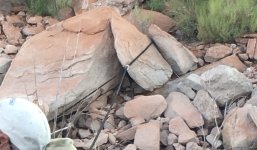
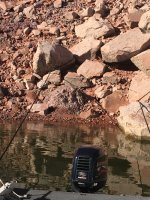

Here are a couple of photos of how we tie off to boulders. I'm heading down tomorrow and hopefully will leave the slip. If I do I will take some better photos for you, and include the butterfly knot we use on the anchor lines. The knot sort of acts like a fulcrum - giving you leverage in the middle of the 100'+ anchor line. Makes it much easier to tighten the lines
Meanwhile - here are the photos I do have of tying off to boulders. We remove the anchors (not needed when tying to boulders - and definitely awkward for carrying on a rocky shore). Our lines have eyes at the end, so it's easy to fee the line through the eye to make a loop, but we have also created a slip knot to create the loop

Brent
Well-Known Member
Hey Welcome! I do a blog on our houseboat adventures every year we go. Some of it may be some help to you. Dooley's at Lake Powell
Main takeaways!
Enjoy your vacation!!
Always wear a life preserver while in the water, PERIOD!
Watch for whales
Dig anchors in deep and keep the lines tight! We have a page about anchoring on our website.
Plan your meals
Bring a lot less food!
Bring a lot more drinks!
Bring a lot less clothing.
Water socks (shoes) are a must!
Main takeaways!
Enjoy your vacation!!
Always wear a life preserver while in the water, PERIOD!
Watch for whales
Dig anchors in deep and keep the lines tight! We have a page about anchoring on our website.
Plan your meals
Bring a lot less food!
Bring a lot more drinks!
Bring a lot less clothing.
Water socks (shoes) are a must!

The Oracle
Well-Known Member
ANCHORING: Use EVERY anchor that comes with the boat. Usually two off the stern on each side (more to come on that). If you don't push the bow onto a sandy beach well with the engines, the bow can "blow out" from under you (i.e., yeah, the stern is anchored, but the bow can be pushed off the bank by a strong crosswind.) So, just nudge up to a SANDY beach at about 2 knots (just above idle as you approach...make sure everyone aboard is prepared for the sudden HALT) , then 'push' it on using about a 5-second burst of full-throttle (before you use that much throttle, ensure the stern is in enough water (4+ feet should do it). With water levels dropping the 'bite' of your bow will only get better the longer you are in one spot. Don't worry about not being able to get the boat off of the beach...you just see-saw the stern back-and-forth in low throttle reverse and off she'll come. No problem.
Important: Anchors DO NOT hold vertically, they hold HORIZONTALLY. You'll most likely have what are called Danforth-type anchors... get them as high up the beach as you can... the higher in relation to the boat, the better. Seriously, if I have enough rode, I walk mine up to a level above the top of the boat. Use as much of your rode as you can... the catenary also serves as a shock absorber. ABSOLUTLEY above the water line, not in the water, and out at about a MINIMUM 30-degree angle from the boat (the 'wider' they are positioned the better, within reason.) 45-degrees is PERFECT, not more than 60-degrees, because any wind from the side actually helps force the bow harder onto shore, thus preventing bow blowout. In tight anchorages (i.e., neighbors nearby), some folks (myself included) like to use two stern anchors, one on each side, to be at relatively shallow angle (i.e., more parallel to the boat's centerline) COMBINED with a midships anchor at a relatively wide angle to handle side-loading (especially if you think there's any chance the bow could blowout). In that situation, the anchors on a given side end up being at about the same position on the beach, give-or-take.
BIG PICTURE?: USE EVERY ANCHOR THAT COMES WITH THE BOAT (4 MINIMUM) NO MATTER HOW GOOD THE WEATHER FORECAST LOOKS! USE THOSE LINES (you don't want 30 feet of useless rode sitting on the deck or on a cleat. 10 feet okay, 5 better, 30 no.). You do that, decent angle away from boat, place them high on the shore... it's really tough to go wrong.
Carry 4 or 5 5-gallon extra cans for insurance, don't go above 5/8 throttle or so. Fuel consumption exponentially increases with throttle position, just like you car, only MUCH worse. Wind and waves also effect fuel consumption, but to a lesser degree than speed. Besides, you only gain a couple of knots by using high throttle. If your cell phone has a GPS app you can see for yourself.
Since Dangling Rope (DR) is closed your generator will use more fuel keeping the ice cream, that you otherwise could have gotten at DR, frozen. But, take the ice cream no matter what!
Important: Anchors DO NOT hold vertically, they hold HORIZONTALLY. You'll most likely have what are called Danforth-type anchors... get them as high up the beach as you can... the higher in relation to the boat, the better. Seriously, if I have enough rode, I walk mine up to a level above the top of the boat. Use as much of your rode as you can... the catenary also serves as a shock absorber. ABSOLUTLEY above the water line, not in the water, and out at about a MINIMUM 30-degree angle from the boat (the 'wider' they are positioned the better, within reason.) 45-degrees is PERFECT, not more than 60-degrees, because any wind from the side actually helps force the bow harder onto shore, thus preventing bow blowout. In tight anchorages (i.e., neighbors nearby), some folks (myself included) like to use two stern anchors, one on each side, to be at relatively shallow angle (i.e., more parallel to the boat's centerline) COMBINED with a midships anchor at a relatively wide angle to handle side-loading (especially if you think there's any chance the bow could blowout). In that situation, the anchors on a given side end up being at about the same position on the beach, give-or-take.
BIG PICTURE?: USE EVERY ANCHOR THAT COMES WITH THE BOAT (4 MINIMUM) NO MATTER HOW GOOD THE WEATHER FORECAST LOOKS! USE THOSE LINES (you don't want 30 feet of useless rode sitting on the deck or on a cleat. 10 feet okay, 5 better, 30 no.). You do that, decent angle away from boat, place them high on the shore... it's really tough to go wrong.
Carry 4 or 5 5-gallon extra cans for insurance, don't go above 5/8 throttle or so. Fuel consumption exponentially increases with throttle position, just like you car, only MUCH worse. Wind and waves also effect fuel consumption, but to a lesser degree than speed. Besides, you only gain a couple of knots by using high throttle. If your cell phone has a GPS app you can see for yourself.
Since Dangling Rope (DR) is closed your generator will use more fuel keeping the ice cream, that you otherwise could have gotten at DR, frozen. But, take the ice cream no matter what!
SAMPLE Speed/Fuel Burn Performance
Engine Speed (RPM) Boat Speed (NMPH) Fuel Burn (GPH)
600 3.1 0.3
1,000 5.3 0.7
1,500 7.9 1.9
2,000 9.8 4.9
2,500 16 8.4
3,000 19 14
3,500 WOT 23 22
JFRCalifornia
Keeper of San Juan Secrets
Great advice, although it should be noted that the 46-footers only come with 2 anchors, not 4... but I've never had a problem keeping that boat anchored with just the two it comes with...ANCHORING: Use EVERY anchor that comes with the boat. Usually two off the stern on each side (more to come on that). I
BIG PICTURE?: USE EVERY ANCHOR THAT COMES WITH THE BOAT (4 MINIMUM) NO MATTER HOW GOOD THE WEATHER FORECAST LOOKS! USE THOSE LINES (you don't want 30 feet of useless rode sitting on the deck or on a cleat. 10 feet okay, 5 better, 30 no.). You do that, decent angle away from boat, place them high on the shore... it's really tough to go wrong.

KBJ
Active Member
When renting house boats in the past, I have had success insisting nicely for extra anchorsGreat advice, although it should be noted that the 46-footers only come with 2 anchors, not 4... but I've never had a problem keeping that boat anchored with just the two it comes with...
- Status
- Not open for further replies.