12 volt 46lb. or 24 volt 54 lb.
This entire thread is very interesting to me.
Keep the advice coming.
If the thrust is the same, but the difference is 12V to 24V, the watts are the same. So take a 12V motor with 55 lbs of thrust. Let's assume that it pulls 720W at full throttle, or 60A @12VDC. Now if you have two 12V batteries in parallel, it SHOULD pull equally from them(in reality it doesn't. But for this example let's assume they do). So each battery sees a load of 360W which is 30A @12VDC.
Now take a 24V motor with 55 lbs of thrust, and at full throttle also pulls 720W at full throttle, or 30A @24VDC. Split those equally between the batteries, and you have each battery again seeing a 360W load, which is 30A @12VDC. So in both setups, the batteries individual load is identical. The difference in efficiency comes from the higher voltage cable run from the batteries to the motor, and also the higher efficiency of the motor itself. Since the motor is inherently more efficient, and you have less losses from heat, so the batteries last marginally longer.
Now here is where lithium shines. As someone stated above, watts are the true measure of work being done. Agreed 100%. However, Peukert's law changes things
drastically for a lead acid battery. Peukert's law basically says, that as the amperage goes up, the amp hours(capacity) of a lead acid battery goes down. So going to a lead acid 24V setup is definitely going to help, but not anywhere close to how much more a lithium battery will help. Here is why:
I will use a cars MPG rating as the analogy. Cars are rated for MPG, which is measured on a flat road, at a nominal speed, of say 55 MPH. Let's use round numbers and say that a car is EPA rated at 20 MPG. Go on the freeway at 75 MPH, you will get less, probably in the 16-17 MPG range. Stop and start traffic will drop it further, in the 12-13 range. Pulling a trailer up a hill? Now you will probably get 6-7 MPG. This is
exactly how a lead acid battery works.
Take a 12V trolling motor with a 12V 100Ah flooded lead acid battery. The 100Ah rating printed on it is almost always the 20 hour rate. That means that if you discharged the battery at 5A for 20 hours, the battery will be depleted. However, that same battery at a 5 hour rate (20A) is now rated as a 47Ah battery. All we did was increase the amps to 20, and it
lost over 50% of its overall capacity. A 12V trolling motor is going to pull anywhere from 20A-60A, which on a single battery will absolutely demolish the Ah rating. Adding a second battery in parallel will help quite a bit, as it doubles the Ah rating, and cuts the amps in half. But it isn't the magic bullet.
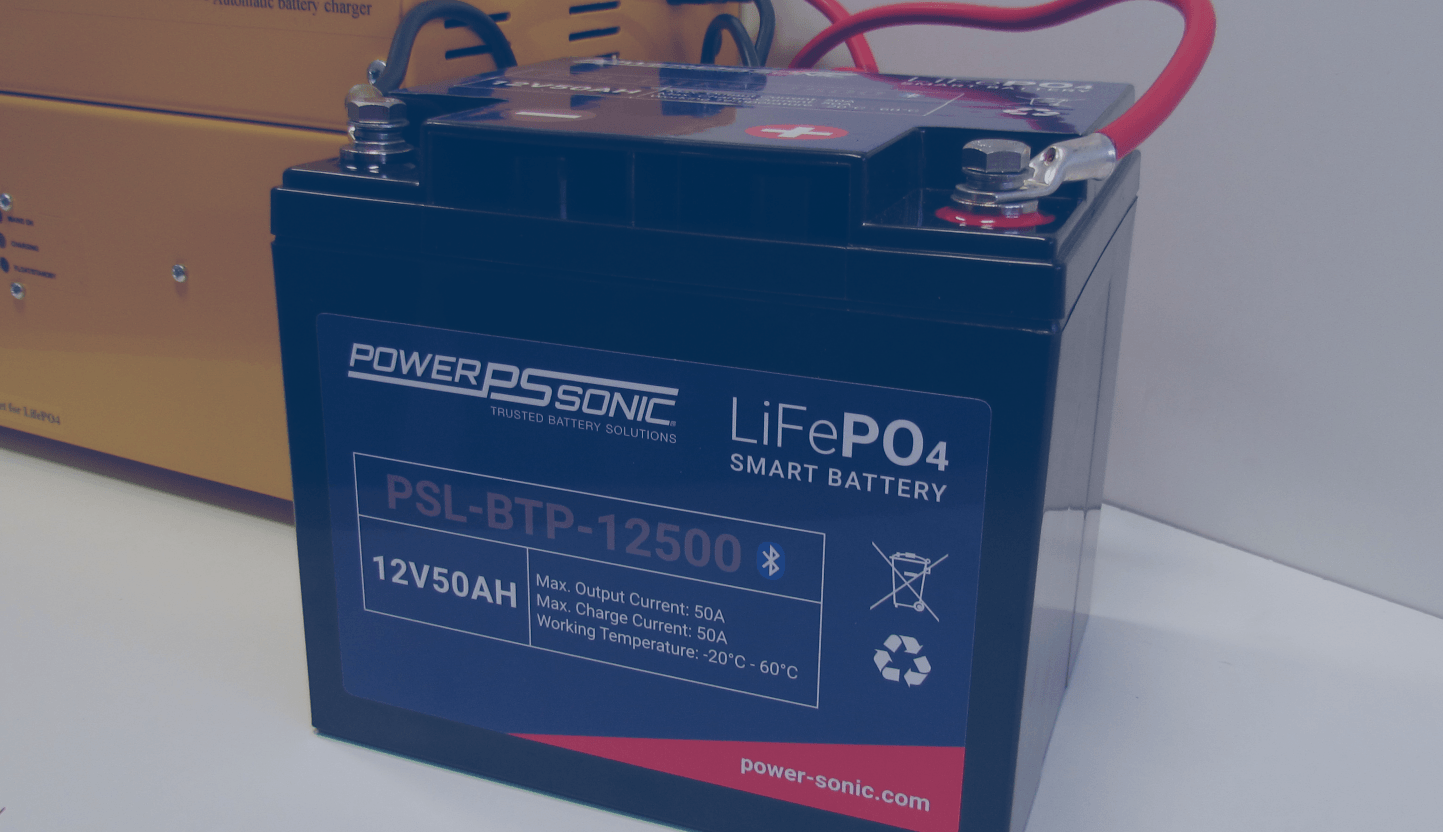
Now let's take a lithium 12V 100Ah battery, and go back to the MPG scenario. A high quality, well built LiFePo4 battery will have almost no Peukert effect. So whether going 55MPH, 75MPH, or pulling a trailer, it will always get at or near the 100Ah rating. Lead acid batteries Peukert value will vary from 1.2-1.4 depending on the brand and quality of the battery. AGM's are significantly better, and range from 1.1-1.2. A good LiFePo4 battery will have a value of 1.01-1.05 which drastically cuts the losses. In a nutshell, with lithium, you always get the Ah that you pay for. With lead acid, it depends greatly on the amp load.
Here is the math:
1X 12V100Ah lead acid battery @20A motor load =47Ah @ 12V or 564 watt/hr reserve (1.25 Peukert value)
2X 12V100Ah lead acid battery in parallel @20A motor load = 95Ah @12V or 1140 watt/hr reserve (1.25 Peukert value)
1X 24V50Ah lithium battery @20A motor load =47Ah @24V or 1128 watt/hr reserve (1.02 Peukert value)
It's a lot of tech to soak in, but the bottom line is that lithium will outperform an equal Ah lead acid battery by 2X or more. I have done a ton of tests and real world comparisons, so I know this for a fact.
The best
short term value
may be 2X lead acid batteries. However, when you factor in the maintenance, 1/4 of the weight, faster charging, no acid, no corrosion, lasts 7+ years, lithium easily wins.


 battlebornbatteries.com