Also, just to provide a little background on my experience, I own an electrical engineering firm and have been an instructor for electrical systems and the electrical code for over 25 years now teaching for such organizations as the International Association of Electrical Inspectors and Arizona Building Officials. That said, you should always verify any information provided to you. I am not an expert by any means on water craft electrical systems but will say this, electricity does not know the difference between a boat, RV, car or home. It will react exactly the same and is influenced by the surrounding conditions.

You are using an out of date browser. It may not display this or other websites correctly.
You should upgrade or use an alternative browser.
You should upgrade or use an alternative browser.
Dock swimming - electrocution
- Thread starter bdn
- Start date
- Status
- Not open for further replies.

Excellent question. First it will not eliminate all current flow. A class "A" device will limit current flow, to ground, to a level of 4 to 6 milliamps. Current flow is still allowed, it is not prevented. There are also different types. Class "B" devices allow up to 20 milliamps and some devices allow more. These will not protect a person from electrocution, they are for equipment protection. Back to class A devices.Why wouldn't ground fault interrupters at each slip pedestal eliminate stray voltage? The isolation transformer would eliminate the effectiveness of the GFCI.
A properly working GFCI (warning, there are some fake GFCI devices out there from China!) senses current leakage between either the supply conductor (the hot) and ground or the return (neutral) and ground. It does this through small current transformers built into the device. These transformers, on each line, monitor the supply and return current. If the supply current or return current are not within 4 to 6 milliamps of each other, the device opens or trips as it sees this as leakage current.
The danger here is the belief that they protect against all electric shock. They won't. The 4 to 6 milliamps threshold was established to protect the vast majority of people from stray current and is based upon dry skin contact with an electrical source. Open wounds, eyes, mouth, ears etc, all have much less resistance than the skin on your hand. A small child or baby's skin is much thinner (less resistance) than and old man's, especially someone who works with their hands as they are calloused. Women have less resistance to shock because, well, they generally take care of themselves better then men do and their skin is generally thinner. Water contact exacerbates this. That is why GFCI protection is required in wet locations by the National Electrical Code and not everywhere in a home.
Finally, if you grab both the hot and neutral wire simultaneously while you are wearing thick soled shoes, the GFCI will not trip as the current flowing to and from the source will be equal; there is not leakage current going to ground.
And all of this is predicated on a device that is properly functioning. NO ONE ever tests these things! When is the last time you tested your GFCI devices at home? (I don't do so regularly and know better). They are supposed to be tested once a month. Electrical devices and equipment fail. Additionally, there are mechanical components to these devices which fail. When operated in extreme environments (the exterior of a home or boat dock definitely qualify as extreme environments, especially at Powell) these devices should be expected to fail more often and will.
Sorry, I also neglected to provide a link to an excellent video on GFCI and AFCI (Arc Fault Circuit Interrupter) devices by EATON. I use this video in many of the seminars I provide. Excellent video and explanation. This applies to GFCI receptacles as well as GFCI circuit breakers.
Not necessarily and, if properly grounded, the isolation system will not impact the operation of a GFCI. If they are not properly grounded, (and you would be absolutely astounded to find out how many are not) then, yes, it absolutely will impact the operation. As the signs say, DO NOT SWIM AROUND BOAT DOCKS!. These systems see substantial abuse! Wind and waves cause vibrations and movement that cannot be stopped. These will cause electrical connections to loosen and fail. Corrosion, dirt, sand and temperature also greatly impact these systems. They require constant attention to be assured as safe.Why wouldn't ground fault interrupters at each slip pedestal eliminate stray voltage? The isolation transformer would eliminate the effectiveness of the GFCI.
No argument against any device which provides safety! Understanding how these devices work is important to understand how they impact safety. Electrical systems, and how they interact with each other, are extremely complex and difficult to understand. If you have not been educated as to the hazards or how the systems work, how can you avoid them? This is not a shortcoming of any individual, it is about exposure and identification. I use the example of common sense in my seminars. We all think we have it and yet, we look around and see so many who don't. Why? Because they are not aware of the hazard and don't know they need to avoid it. Think of a hot stove, we all know putting our hand on a hot burner tends to hurt a little bit, this is common sense. Then, why has just about every child on the planet done this if it is common sense? Because they have not been exposed to it and don't understand the hazard. This is not to say the child is stupid because they aren't. They (we) all need to learn about our environment and the hazards that surround us.Better get studying AYBC ... It,s eye opening when you teach an electrical firm about working on marine equipment.
Also not sure why the argument against a safety system above.
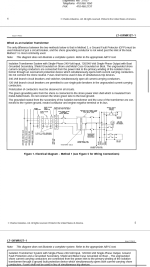
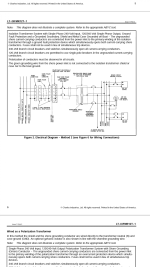
I do not like the last sentence of the instructions where they tell you not to connect the shore power ground to the boat ground. It creates a difference of potential between the dock and the boat. You want a wire, not a human, to equalize voltage potential and carry current. That said, I cannot claim to understand what the design intent is here as I have not been exposed to the concerns that their design team has. There may be a valid reason for this. That said, (due to my background) I have seen many designers and engineers who are not aware of the issues and provide improper direction. So, as is required by the National Electrical Code (not the national boat or water craft code if there is such a thing) all grounds and grounding systems are to be made common in an attempt to eliminate differences of potential. Due to liability reasons, I will not offer my opinion on if it is correct or not, I will only say that I have concerns.
It appears, solely based upon my interpretation of the drawing, that the second is showing a Class B or higher GFCI. This does add additional safety but does not provide sufficient protection against shock for personnel. Depending on the size of the electrical system, this may be necessary.
All appliances and equipment have a certain level of “leakage current”, A refrigerator, as an example, per UL standards must meet a maximum level of leakage current. This value (which I do not know off the top of my head) is less than the tripping level of a class A device. This is why it is permissible to put a refrigerator on a GFCI. If the GFCI device is tripping, YOU HAVE A PROBLEM!
The problem, for a class A device, is when you put several appliances on the same circuit or are protected by the same GFCI device. These leakage currents add up and can exceed the tripping level of the Class A device. This is why many believe that the GFCI device in your home is bad, because it keeps tripping but you can’t find a problem. When encountering this, add a dedicated GFCI device for that appliance and make sure it is not passing through an upstream GFCI device or it will not work properly.
In any case, this is where the Class B device comes into play. It will not nuisance trip due to the multiple devices downstream and still provides an additional level of safety not present in figure 1. I personally would chose the second as well.
One other point I neglected to add. When you have you boat fed through an isolation transformer, NEVER bring an additional power source from the dock to the boat. The difference of potential gremlin may be present.
It appears, solely based upon my interpretation of the drawing, that the second is showing a Class B or higher GFCI. This does add additional safety but does not provide sufficient protection against shock for personnel. Depending on the size of the electrical system, this may be necessary.
All appliances and equipment have a certain level of “leakage current”, A refrigerator, as an example, per UL standards must meet a maximum level of leakage current. This value (which I do not know off the top of my head) is less than the tripping level of a class A device. This is why it is permissible to put a refrigerator on a GFCI. If the GFCI device is tripping, YOU HAVE A PROBLEM!
The problem, for a class A device, is when you put several appliances on the same circuit or are protected by the same GFCI device. These leakage currents add up and can exceed the tripping level of the Class A device. This is why many believe that the GFCI device in your home is bad, because it keeps tripping but you can’t find a problem. When encountering this, add a dedicated GFCI device for that appliance and make sure it is not passing through an upstream GFCI device or it will not work properly.
In any case, this is where the Class B device comes into play. It will not nuisance trip due to the multiple devices downstream and still provides an additional level of safety not present in figure 1. I personally would chose the second as well.
One other point I neglected to add. When you have you boat fed through an isolation transformer, NEVER bring an additional power source from the dock to the boat. The difference of potential gremlin may be present.
Ecobatt, arguments have become negative in connotation. An argument is just a discussion or asserting a point. Absolutely nothing wrong with that!
BoatUS Expert Advice
BoatUS Magazine, the largest boating magazine in the US, provides boating skills, DIY maintenance, safety and news from top experts.www.boatus.com
So why does every major safety article on this subject suggest the use of an isolation transformer? From my understanding if the IT is on your boat, then any stray current that may exist due to faulty wiring or device will not enter the water, but return to the IT.
Not looking to argue, we all just want to know more about this subject.
In this case, I believe the isolation transformers are a good idea. If you have been so unfortunate to endure my previous posts on grounding on how a boat dock takes a beating, you will see that the loss of a ground path to your boat will eventually happen. Unfortunately, the loss of this path will not be evident.
By installing an isolation transformer, that is properly grounded, you re-establish an electrical system at your boat. Any faulted circuit has a much shorter and more reliable path back to the source (the new isolation transformer) allowing it to clear quickly (again provided everything is wired correctly). It is not uncommon, for this exact reason, to do the same thing for electrical distribution systems.
So in a real world scenario, can you describe situation(s) where each diagram would present a shock risk? IE, shore power cord abraded, touching metal railing on boat or dock, etc. Help us understand where/how this ground potential differential can shock someone.
Is the only potential place of fault between the pedestal and the primary side of the IT? Or the entire boat?
Is there a problem only if the IT fails? Or is it a problem all the time.
Good discussion, I love learning and hearing new ideas.
Is the only potential place of fault between the pedestal and the primary side of the IT? Or the entire boat?
Is there a problem only if the IT fails? Or is it a problem all the time.
Good discussion, I love learning and hearing new ideas.
There are dozens. Lets just start with two premises. 1) Electricity always wants to return to the source. 2) It will take all paths available to it to get back to that source with the amount of current flow on each path dependent upon the resistance, or quality, of the paths.So in a real world scenario, can you describe situation(s) where each diagram would present a shock risk? IE, shore power cord abraded, touching metal railing on boat or dock, etc. Help us understand where/how this ground potential differential can shock someone.
Is the only potential place of fault between the pedestal and the primary side of the IT? Or the entire boat?
Is there a problem only if the IT fails? Or is it a problem all the time.
Good discussion, I love learning and hearing new ideas.
So imagine our imaginary boat dock that is made of steel and has a multitude of flexible connections that allow it to move with wave and water levels. Both mechanical and electrical components will move and eventually begin to breakdown or fail.
The metal system, when first installed, will be an excellent return path for a faulted circuit to return to the source. This excellent path will allow an overcurrent device to clear very quickly. What is not readily apparent, because the faulted circuit cleared quickly, is that the water surrounding the faulted circuit (if in contact with the water) was also carrying current for the brief time the faulted circuit was operational.
In a situation where the grounding system has been compromised (and this can occur anywhere in the electrical system, think hundreds, if not thousands, of opportunities for failure) the system may not allow the quick clearing of an overcurrent device or it may not clear at all. As a result, the water, as a parallel path, now is conducting electricity and poses a risk for electric shock. It is a very poor conductor and cannot clear an overcurrent device but can, as we all know, conduct sufficient current to kill. This path will exist until corrected.
In thinking about this, think milliamps, not amps. A 20 amp breaker needs a minimum of 20 amps of current flow to trip and even then, it will take time to do so as these are inverse time devices and not instantaneous. So, a circuit drawing 25 amps may take a minute or more to actually clear. In the water, as it is such a poor conductor, we are speaking on terms of milliamps. 1/1000 of an amp. .005 of an amp can kill a person. The severity of the shock depends on multiple factors and duration.
An such example, that is easily relatable, was a tragic accident that happened in Florida. A young girl was electrocuted walking barefoot though her backyard. It was early in the morning and the grass was wet with dew. An extension cord was plugged into an outlet which was not protected by a GFCI device. The cord had a nick in the insulation that made contact with the grass and earth. The nick was found approximately 60 feet away from the girl (I can't recall the age but I believe she was between the ages of 7 and 11 years old). The electrical service was between her and the nick in the cord. The electricity was taking all paths available to it to get back to the source. There was not sufficient current flow to trip the fuse or breaker but enough where it resulted in the unfortunate death of the girl.
Many, many examples of instances such as this. Many code requirements are based upon such instances, it is unfortunate that fatalities must occur to make these changes. Worst still, it is unfortunate that many ignore the codes or argue against them without fully understanding why the requirements exist. Even worse is the fact that the vast majority of those who enforce these codes are not properly trained or must enforce multiple disciplines. I have been involved in the electrical industry since 1980. If I new 1/10 of that industry I would be a rich person. Now think about that poor 30 to 40 year old inspector who must enforce electrical, plumbing, refrigeration, building and fire codes to name a few. It just isn't possible to be able to identify all the concerns. That is why we should not take anything at face value, an inspector passing an installation does not mean it is correct or safe...
I understand the situation of a metal dock and having multiple ground paths back to the source. But I'm having trouble grasping how this affects a boat with an IT. From my understanding, (or lack thereof) if an IT is installed on the boat itself, the only place where a fault can occur that would try to find its way back to shore, would be on the primary side of the IT. If the fault is on the secondary side, then any fault or stray current would (or should?) find its way back to the IT.
Let's assume a metal hulled boat, since most boats moored at Lake Powell are aluminum or steel hull.
Since the boat SHOULD have all metal parts bonded and connected to the system ground at 1 and (only 1) place, a secondary side fault should never use the water as a path back since the grounding system and/or metal hull of the boat would be a exponentially better conductor than the water.
I guess mostly what I am asking is... in an actual scenario, on a metal hull boat, in Lake Powell, with an IT installed on the boat, where are the potential failure points, and how can they be mitigated? Obviously there is no guarantees in anything, but I think most if not all boaters on Lake Powell, including myself, would do whatever is reasonably possible to make their boats safer.
Let's assume a metal hulled boat, since most boats moored at Lake Powell are aluminum or steel hull.
Since the boat SHOULD have all metal parts bonded and connected to the system ground at 1 and (only 1) place, a secondary side fault should never use the water as a path back since the grounding system and/or metal hull of the boat would be a exponentially better conductor than the water.
I guess mostly what I am asking is... in an actual scenario, on a metal hull boat, in Lake Powell, with an IT installed on the boat, where are the potential failure points, and how can they be mitigated? Obviously there is no guarantees in anything, but I think most if not all boaters on Lake Powell, including myself, would do whatever is reasonably possible to make their boats safer.
Let me try to see if I can provide a scenario. Assuming all systems on the boat are installed correctly and operational. There will be a connection from shore to the boat. The grounding from the dock to the boat will be made common, or should be. If not there may be paths from a person touching the boat and the dock or water at the same time.I understand the situation of a metal dock and having multiple ground paths back to the source. But I'm having trouble grasping how this affects a boat with an IT. From my understanding, (or lack thereof) if an IT is installed on the boat itself, the only place where a fault can occur that would try to find its way back to shore, would be on the primary side of the IT. If the fault is on the secondary side, then any fault or stray current would (or should?) find its way back to the IT.
Let's assume a metal hulled boat, since most boats moored at Lake Powell are aluminum or steel hull.
Since the boat SHOULD have all metal parts bonded and connected to the system ground at 1 and (only 1) place, a secondary side fault should never use the water as a path back since the grounding system and/or metal hull of the boat would be a exponentially better conductor than the water.
I guess mostly what I am asking is... in an actual scenario, on a metal hull boat, in Lake Powell, with an IT installed on the boat, where are the potential failure points, and how can they be mitigated? Obviously there is no guarantees in anything, but I think most if not all boaters on Lake Powell, including myself, would do whatever is reasonably possible to make their boats safer.
Next possibility can be caused by "loosing a neutral" or "open neutral" where the loss, causes current flow on the equipment grounding conductors, which connect to the dock etc.
As far as not using the water, current will flow through the water attempting to get back to the source. If it didn't, we would never have ESD. Again, current will take all paths available to it.
Last paragraph of your reply. Excellent question! The best response I can give is you must assure that all conductor insulation is in good shape and that all connections, especially grounding, are done properly. Unfortunately you will absolutely have no control over anything except your boat. Beyond that, for personnel protection, do not board boats from a metal dock in bare feet and do not grab metallic docks from your boat while connected to shore power. If it is a metal hulled boat, stray current will enter and exit the boat hull, it will be a better conductor than the water. Perhaps one of the best ways to assure protection in such a situation is with a bonding jumper. Literally take a jumper cable, clamp it to the metal hull on one end and the metal dock on the other. It does not have to be a large cable as it will not carry much current unless there is a lighting strike. It will equalize potential between the two surfaces in the immediate area of the connection.
Isolating the secondary side of the transformer does not isolate the boat from the dock's electrical system or grounding system. A short on the boat, if through a transformer, should not energize the dock or surrounding water unless there is an issue with the installation and it will not clear the short. A short on the dock can be transferred to the boat. The boat's electrical system will not "see" the current and will be non-responsive. If there is a problem on the boat, stemming from a short on the secondary side of the IT, the dock's electrical system will not see it either (other than being shown as an additional load which is another discussion) and will not react to it.
The bottom line: Just like your home or business, the use of an electricity is never 100% safe. The older the system, the more it is used, or abused, improper maintenance of the system or improper installation all create additional hazards. Insulation breakdown, whether it be the conductor insulation, failure of an air gap or tracking across a conductor's insulation are the primary reasons for shock and fire. Circuit breakers and most of the grounding systems are "seat belts" for the system should there be an insulation failure.

Bill Sampson
Keeper of San Juan Secrets
Mike Holt's website is also an excellent source for this subject, although he is approaching it more from a swimming pool aspect. This is also a large problem with GFI outlets and breakers in swimming pools.Let me try to see if I can provide a scenario. Assuming all systems on the boat are installed correctly and operational. There will be a connection from shore to the boat. The grounding from the dock to the boat will be made common, or should be. If not there may be paths from a person touching the boat and the dock or water at the same time.
Next possibility can be caused by "loosing a neutral" or "open neutral" where the loss, causes current flow on the equipment grounding conductors, which connect to the dock etc.
As far as not using the water, current will flow through the water attempting to get back to the source. If it didn't, we would never have ESD. Again, current will take all paths available to it.
Last paragraph of your reply. Excellent question! The best response I can give is you must assure that all conductor insulation is in good shape and that all connections, especially grounding, are done properly. Unfortunately you will absolutely have no control over anything except your boat. Beyond that, for personnel protection, do not board boats from a metal dock in bare feet and do not grab metallic docks from your boat while connected to shore power. If it is a metal hulled boat, stray current will enter and exit the boat hull, it will be a better conductor than the water. Perhaps one of the best ways to assure protection in such a situation is with a bonding jumper. Literally take a jumper cable, clamp it to the metal hull on one end and the metal dock on the other. It does not have to be a large cable as it will not carry much current unless there is a lighting strike. It will equalize potential between the two surfaces in the immediate area of the connection.
Isolating the secondary side of the transformer does not isolate the boat from the dock's electrical system or grounding system. A short on the boat, if through a transformer, should not energize the dock or surrounding water unless there is an issue with the installation and it will not clear the short. A short on the dock can be transferred to the boat. The boat's electrical system will not "see" the current and will be non-responsive. If there is a problem on the boat, stemming from a short on the secondary side of the IT, the dock's electrical system will not see it either (other than being shown as an additional load which is another discussion) and will not react to it.
The bottom line: Just like your home or business, the use of an electricity is never 100% safe. The older the system, the more it is used, or abused, improper maintenance of the system or improper installation all create additional hazards. Insulation breakdown, whether it be the conductor insulation, failure of an air gap or tracking across a conductor's insulation are the primary reasons for shock and fire. Circuit breakers and most of the grounding systems are "seat belts" for the system should there be an insulation failure.
His site has some good information however, be cautious. He is pretty knowledgeable but, not always on the right side of the conversation. Some of the sites I use are EC&M, IAEI and equipment manufacture's sites such as SQ D and Eaton. NEVER use the forums, any forum, for a definitive source of information. Use them as a starting point. Especially Holt's forums. Way too much incorrect information as it is so high profile, it attracts a lot of attention.Mike Holt's website is also an excellent source for this subject, although he is approaching it more from a swimming pool aspect. This is also a large problem with GFI outlets and breakers in swimming pools.
Bill Sampson
Keeper of San Juan Secrets
I will say that Mike Holt has been addressing this problem for probably 5 years now, so he may have had a jump on things.His site has some good information however, be cautious. He is pretty knowledgeable but, not always on the right side of the conversation. Some of the sites I use are EC&M, IAEI and equipment manufacture's sites such as SQ D and Eaton. NEVER use the forums, any forum, for a definitive source of information. Use them as a starting point. Especially Holt's forums. Way too much incorrect information as it is so high profile, it attracts a lot of attention.

Powelldreamer
Well-Known Member
Thank you for the information. I appreciate the education.And you are correct, the current will return to the isolation transformer to complete the circuit and allow the actuation of an overcurrent device. It does this through the grounding system and the system bonding jumper. As there is no direct electrical connection to the shore power, and current can not flow beyond the transformer as it cannot complete a circuit but it will continue to try as long as there is a path. This is why grounding is imperative.
Remember the old saying, electricity takes the least path of resistance to ground? That is WRONG! It takes ALL paths available to it to ground. The amount of current flowing on each path will vary depending on the resistance of each path. A great way to illustrate this is with your home. On a windy day you open a window on your home. If only one window in the home is open, only a little air movement will be felt through the window. This is because a home is not absolutely tight, some air movement will be through gaps around doors and bathroom exhaust vents. Now if you open a window on the other side of the house, you get a lot of air movement. Now, open a third smaller window somewhere else in the house. You will still see air movement through the original window and a smaller amount of air movement through the third because the smaller window has more resistance but, it still allows air movement. Electrical current flow acts exactly the same way. It will take all paths available to it back to the source.
- Status
- Not open for further replies.