
You are using an out of date browser. It may not display this or other websites correctly.
You should upgrade or use an alternative browser.
You should upgrade or use an alternative browser.
Snake on my boat!
- Thread starter Ken Haptonstall
- Start date
- Status
- Not open for further replies.
Do not click this link if you don't like snakes in water, or on your fishing hook.
http://www.desmoinesregister.com/st...huge-snake-fish-rathbun-lake-photo/454652001/
http://www.desmoinesregister.com/st...huge-snake-fish-rathbun-lake-photo/454652001/

Meatwagon
Keeper of San Juan Secrets
back on the Mississippi growing up we used to train them like bird dogs to fetch our crappies for us.Do not click this link if you don't like snakes in water, or on your fishing hook.
http://www.desmoinesregister.com/st...huge-snake-fish-rathbun-lake-photo/454652001/
 But seriously it was very common to see these anytime we went fishing back in Illinois growing up, and would take fish right off your stringer if they were floating on the surface.
Freshwater
New Member
My Flower and I were fishing straight out from Bullfrog going towards Halls Crossing and in the front of the last cove before the wall that takes you around the corner to the Island a little west of Halls ramp
we saw a greenish hue colored snake approximately 5 feet long swimming in the direction of Bullfrog. I have a 70lb. thrust Minnkota on a 20 ft. pontoon and that snake started heading towards us as we were trolling into the cove. I was trolling about .7 miles an hour for walleyes and the snake was gaining on me so I kicked the trolling mtr. up all the way (about 2mph) and the flower didn't think that was fast enough, but the snake finally gave up. This was the last week of April this year. Any ideas as to species.
we saw a greenish hue colored snake approximately 5 feet long swimming in the direction of Bullfrog. I have a 70lb. thrust Minnkota on a 20 ft. pontoon and that snake started heading towards us as we were trolling into the cove. I was trolling about .7 miles an hour for walleyes and the snake was gaining on me so I kicked the trolling mtr. up all the way (about 2mph) and the flower didn't think that was fast enough, but the snake finally gave up. This was the last week of April this year. Any ideas as to species.

Waterbaby
Escalante-Class Member
No diamonds on its back, no problem
https://www.nps.gov/glca/learn/nature/reptiles.htm
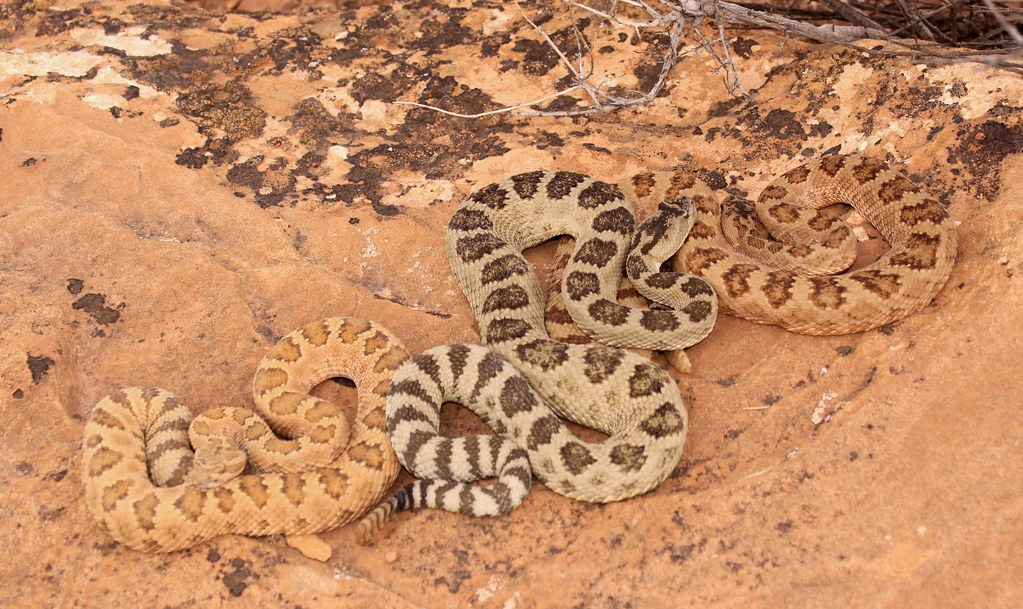
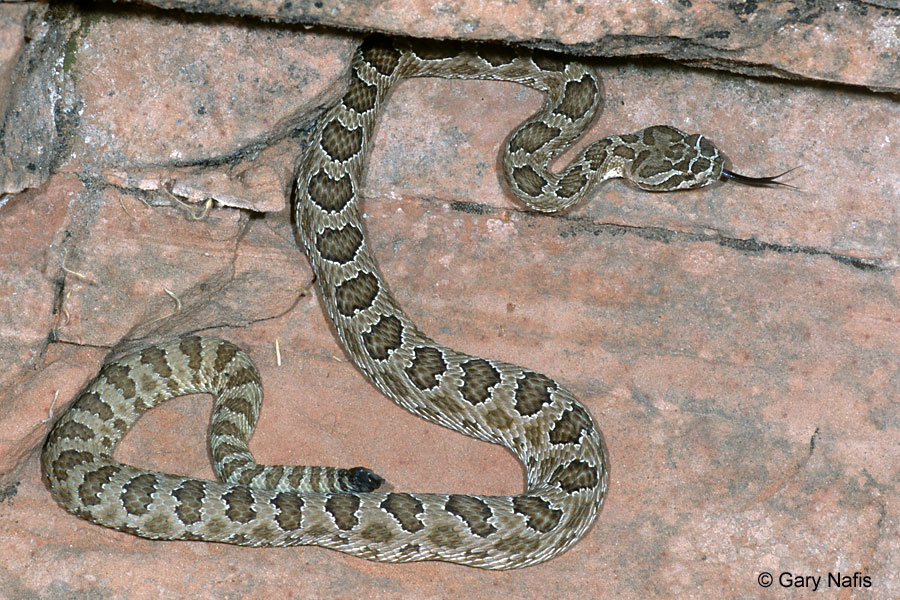
There are at least four western rattlesnake (Crotalus viridus) subspecies present in Glen Canyon NRA: midget faded rattlesnake (C. v. concolor), Great Basin rattlesnake (C. v. lutosus), Hopi rattlesnake (C. v. nuntius), and the Grand Canyon rattlesnake (C. v. abyssus). Rattlesnakes are the only venomous snakes in Glen Canyon NRA. Like most reptiles, they will avoid detection if possible.
Crotalus viridus
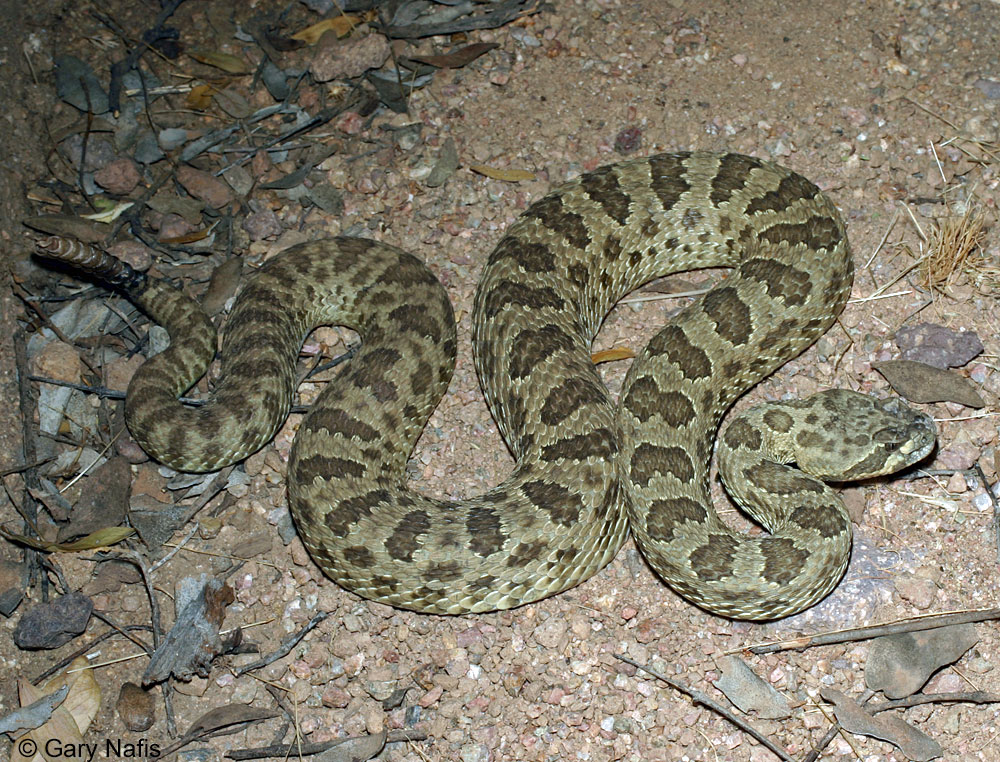
(C. v. concolor
C. v. lutosus
C. v. nuntius
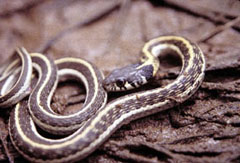
Striped whipsnake (Masticophis taeniatus) [non-venomous]
Last edited:
Waterbaby
Escalante-Class Member
BTW the Midget Rattlesnake is working to protect the species:
http://www.hcn.org/issues/45.8/blm-teams-with-researchers-to-protect-midget-faded-rattlesnake
BLM teams with researchers to protect midget faded rattlesnake
Marian Lyman Kirst May 22, 2013
Summer snake hunting in western Colorado is a race against the sun. The reptiles emerge early from their dens to soak up dawn's dull warmth. But once the hillsides hum with heat, they'll split for the shadows. "We better get going," says biologist Josh Parker of Georgia's Clayton State University when I meet his small team of "herpers" in Grand Junction at 5 a.m. one June morning.
The three men -- Parker; Stephen Spear, a biologist with the Orianne Society, a Georgia-based reptile conservation group, who is clad in knee-high leather and nylon snake boots (equipped with 16 inches of "fang-deflecting armor"); and Arizona State University student David Vardukyan -- are a caffeinated whirlwind. Water bottles, snacks and maps fly like so much jetsam into an SUV stickered with rock-band decals. Its vanity plate reads "CONCOLR," an homage to the team's curious quarry: Crotalus oreganus concolor, the midget faded rattlesnake.
As its name implies, the midget faded is much smaller than most other rattlers, averaging 20 inches long, and its markings -- which resemble liver-shaped drops of dried blood -- pale over time. Edward Abbey once wrote that its "insulting name … may explain (its) alleged bad temper," a reputation more likely born of the species' potent neurotoxic venom, among the most powerful of any North American viper.
Midget fadeds are actually relatively docile and reclusive creatures, preferring creviced dens in rocky outcrops to burrows in open areas. Parker, who sports a graying tussock of chin whiskers and a silver barbell through one eyebrow, describes the snakes the same way you might afternoon tea -- "delightful."
Considered a sensitive species in both Wyoming and Colorado, the midget faded is increasingly threatened by energy development. Its range, which includes portions of Utah, Colorado and Wyoming, overlies rich oil and gas deposits and has areas crosshatched by wind farms. But there's been little research on how such projects affect the snakes. In fact, most of what's known about the species comes from Parker's dissertation on its Wyoming populations. That's something the herpers -- and the Bureau of Land Management, which has dispatched them -- hope to change.
As we head for the canyons beyond the city, Spear unfolds BLM maps marked with likely locations of midget faded dens and hibernacula, or winter shelters, for which we'll spend the morning scouting. Protecting dens -- which can house hundreds of snakes at once -- is key to preserving midget faded populations because they rely more heavily on them than do other rattlers, as communal areas during adolescence, gestation and other vulnerable life stages such as shedding, Spear explains.
The Colorado office of the BLM has been aware of the species' existence on the Western Slope since 2000, when a local natural gas boom was ramping up. But the snakes were so seldom encountered that they rarely came up as a management issue. Then, in 2010, a road-killed midget faded rattler, and later its den site, were found just a few meters from a well pad near Rangely. With the BLM's White River field office preparing for as many as 21,000 new wells in the surrounding Piceance Basin in the next 20 years, the agency knew it needed to find ways to protect the species. The data the herpers collect will help it guide development away from areas the snakes need most. After all, nobody -- not the BLM, the energy companies, nor the herpers themselves -- wants to see the midget faded decline enough to end up on the endangered species list, which comes with onerous land-use restrictions. Says Spear: "It impresses me that (the agency) is working on a species that doesn't bring in a lot of money and is often vilified."
The team's Colorado work is an extension of a Wyoming-based effort started in 2009. Wyoming's midget faded populations -- already struggling due in part to interstate and road building, as well as the submersion of habitat beneath Flaming Gorge Reservoir -- are restricted to a finger of habitat around the reservoir. With thousands of acres in the region now being considered for wind, oil and gas development, the Wyoming Game and Fish Department teamed up with Parker and Spear to map midget faded dens and key foraging areas, and determine how those places are connected in hopes of understanding and buffering possible impacts to the species.
Spear developed a GIS model that predicts probable den sites based on records of midget faded sightings; the snakes' narrow habitat needs, such as sandstone outcroppings; and other environmental variables like vegetation and elevation. Then he and Parker surveyed predicted sites to verify the model's results, identifying 12 new midget faded dens and collecting life history and genetic data from snakes encountered along the way. Their preliminary findings suggest that the dense networks of roads serving energy projects are a significant problem even if seldom used. Studies have found that just five cars per four hours will kill half the snakes trying to cross, blocking the creatures from key foraging grounds, which for midget fadeds can be as far as one kilometer from dens, and from mixing their genes with those of other families. Also, seismic surveying for oil and gas, which involves detonating underground explosives, may collapse dens.
Agency officials felt Spear's model might offer a way forward in western Colorado as well. Often, BLM surveys simply determine areas appropriate for development based on a species' presence or absence -- with protected habitat determined by a line drawn around areas where the creature has been spotted. But that method tends to miss important habitat features like den sites, Spear explains, while unnecessarily "including a lot of areas that are not good habitat," where energy could safely be developed.
Spear's model provides more precise data that will make planning and mitigation measures more effective, says White River field office spokesman David Boyd. Companies hoping to develop in probable snake habitat will be required to survey for the species prior to any surface disturbances and to avoid possible hibernacula or den sites by up to 660 feet. Companies will also be required to manage infrastructure in ways that reduce the risk of killing snakes, including gating roads to allow only well-pad traffic, says Boyd.
At a narrow canyon footing a rocky slope, Parker pulls the SUV over. We smear on sunscreen, swig water and grab gear, including mammoth metal pincers that resemble something a giantess might use to pluck her eyebrows -- "snake tweezers," Vardukyan says.
The standard search procedure is to spread out evenly and walk for one hour in a straight line, looking for snakes and their traces: a shed skin or sinuous scribble in the dust. When someone spots a faded midget, the team takes a GPS location and grabs and bags the serpent (with the snake tweezers, of course). Back at the truck, they coax the creature into a tube so they can safely measure and weigh it, estimate its age, determine its sex and reproductive condition, and count its rattles. They also take a blood sample for the species' genetic archive, and a venom sample for a Colorado biologist investigating the neurotoxin's potential biomedical applications (compounds in Gila monster venom, for example, are used to treat diabetes) and the genetic differences between closely related rattler species.
By the end of the summer, the team will have found evidence of 22 dens, including 18 live and three road-killed midget fadeds and one shed skin. They will use this information to refine the model when they ground truth it in summer 2014.
But we don't hit pay dirt until the second morning of our hunt, in an area where Spear's model predicts dens. As the mesas begin to blush pink, we set out across what seems like the perfect midget faded haunt: a south-facing bank, crowned in rocky outcrops and flanked with sandstone slabs. Still a novice at searching out venomous snakes, I gleefully -- and heedlessly -- push my face into rock shadows and under ledges as if nosing out a lost shoe.
"Hey! I got one!" Parker calls out as the rest of us stumble back across the slope to converge on his find. "Be as quiet as possible and give it space," Parker says as we whisper cameras from pockets. "Where is it?" I ask.
"Just below that slab of sandstone," Spear says, pointing.
snip....
http://www.hcn.org/issues/45.8/blm-teams-with-researchers-to-protect-midget-faded-rattlesnake
BLM teams with researchers to protect midget faded rattlesnake
Marian Lyman Kirst May 22, 2013
A large yearling midget faded rattlesnake found near its den in Rio Blanco County, Colorado.
Joshua M. Parker
Summer snake hunting in western Colorado is a race against the sun. The reptiles emerge early from their dens to soak up dawn's dull warmth. But once the hillsides hum with heat, they'll split for the shadows. "We better get going," says biologist Josh Parker of Georgia's Clayton State University when I meet his small team of "herpers" in Grand Junction at 5 a.m. one June morning.
The three men -- Parker; Stephen Spear, a biologist with the Orianne Society, a Georgia-based reptile conservation group, who is clad in knee-high leather and nylon snake boots (equipped with 16 inches of "fang-deflecting armor"); and Arizona State University student David Vardukyan -- are a caffeinated whirlwind. Water bottles, snacks and maps fly like so much jetsam into an SUV stickered with rock-band decals. Its vanity plate reads "CONCOLR," an homage to the team's curious quarry: Crotalus oreganus concolor, the midget faded rattlesnake.
As its name implies, the midget faded is much smaller than most other rattlers, averaging 20 inches long, and its markings -- which resemble liver-shaped drops of dried blood -- pale over time. Edward Abbey once wrote that its "insulting name … may explain (its) alleged bad temper," a reputation more likely born of the species' potent neurotoxic venom, among the most powerful of any North American viper.
Midget fadeds are actually relatively docile and reclusive creatures, preferring creviced dens in rocky outcrops to burrows in open areas. Parker, who sports a graying tussock of chin whiskers and a silver barbell through one eyebrow, describes the snakes the same way you might afternoon tea -- "delightful."
Considered a sensitive species in both Wyoming and Colorado, the midget faded is increasingly threatened by energy development. Its range, which includes portions of Utah, Colorado and Wyoming, overlies rich oil and gas deposits and has areas crosshatched by wind farms. But there's been little research on how such projects affect the snakes. In fact, most of what's known about the species comes from Parker's dissertation on its Wyoming populations. That's something the herpers -- and the Bureau of Land Management, which has dispatched them -- hope to change.
As we head for the canyons beyond the city, Spear unfolds BLM maps marked with likely locations of midget faded dens and hibernacula, or winter shelters, for which we'll spend the morning scouting. Protecting dens -- which can house hundreds of snakes at once -- is key to preserving midget faded populations because they rely more heavily on them than do other rattlers, as communal areas during adolescence, gestation and other vulnerable life stages such as shedding, Spear explains.
The Colorado office of the BLM has been aware of the species' existence on the Western Slope since 2000, when a local natural gas boom was ramping up. But the snakes were so seldom encountered that they rarely came up as a management issue. Then, in 2010, a road-killed midget faded rattler, and later its den site, were found just a few meters from a well pad near Rangely. With the BLM's White River field office preparing for as many as 21,000 new wells in the surrounding Piceance Basin in the next 20 years, the agency knew it needed to find ways to protect the species. The data the herpers collect will help it guide development away from areas the snakes need most. After all, nobody -- not the BLM, the energy companies, nor the herpers themselves -- wants to see the midget faded decline enough to end up on the endangered species list, which comes with onerous land-use restrictions. Says Spear: "It impresses me that (the agency) is working on a species that doesn't bring in a lot of money and is often vilified."
The team's Colorado work is an extension of a Wyoming-based effort started in 2009. Wyoming's midget faded populations -- already struggling due in part to interstate and road building, as well as the submersion of habitat beneath Flaming Gorge Reservoir -- are restricted to a finger of habitat around the reservoir. With thousands of acres in the region now being considered for wind, oil and gas development, the Wyoming Game and Fish Department teamed up with Parker and Spear to map midget faded dens and key foraging areas, and determine how those places are connected in hopes of understanding and buffering possible impacts to the species.
Spear developed a GIS model that predicts probable den sites based on records of midget faded sightings; the snakes' narrow habitat needs, such as sandstone outcroppings; and other environmental variables like vegetation and elevation. Then he and Parker surveyed predicted sites to verify the model's results, identifying 12 new midget faded dens and collecting life history and genetic data from snakes encountered along the way. Their preliminary findings suggest that the dense networks of roads serving energy projects are a significant problem even if seldom used. Studies have found that just five cars per four hours will kill half the snakes trying to cross, blocking the creatures from key foraging grounds, which for midget fadeds can be as far as one kilometer from dens, and from mixing their genes with those of other families. Also, seismic surveying for oil and gas, which involves detonating underground explosives, may collapse dens.
Agency officials felt Spear's model might offer a way forward in western Colorado as well. Often, BLM surveys simply determine areas appropriate for development based on a species' presence or absence -- with protected habitat determined by a line drawn around areas where the creature has been spotted. But that method tends to miss important habitat features like den sites, Spear explains, while unnecessarily "including a lot of areas that are not good habitat," where energy could safely be developed.
Spear's model provides more precise data that will make planning and mitigation measures more effective, says White River field office spokesman David Boyd. Companies hoping to develop in probable snake habitat will be required to survey for the species prior to any surface disturbances and to avoid possible hibernacula or den sites by up to 660 feet. Companies will also be required to manage infrastructure in ways that reduce the risk of killing snakes, including gating roads to allow only well-pad traffic, says Boyd.
At a narrow canyon footing a rocky slope, Parker pulls the SUV over. We smear on sunscreen, swig water and grab gear, including mammoth metal pincers that resemble something a giantess might use to pluck her eyebrows -- "snake tweezers," Vardukyan says.
The standard search procedure is to spread out evenly and walk for one hour in a straight line, looking for snakes and their traces: a shed skin or sinuous scribble in the dust. When someone spots a faded midget, the team takes a GPS location and grabs and bags the serpent (with the snake tweezers, of course). Back at the truck, they coax the creature into a tube so they can safely measure and weigh it, estimate its age, determine its sex and reproductive condition, and count its rattles. They also take a blood sample for the species' genetic archive, and a venom sample for a Colorado biologist investigating the neurotoxin's potential biomedical applications (compounds in Gila monster venom, for example, are used to treat diabetes) and the genetic differences between closely related rattler species.
By the end of the summer, the team will have found evidence of 22 dens, including 18 live and three road-killed midget fadeds and one shed skin. They will use this information to refine the model when they ground truth it in summer 2014.
But we don't hit pay dirt until the second morning of our hunt, in an area where Spear's model predicts dens. As the mesas begin to blush pink, we set out across what seems like the perfect midget faded haunt: a south-facing bank, crowned in rocky outcrops and flanked with sandstone slabs. Still a novice at searching out venomous snakes, I gleefully -- and heedlessly -- push my face into rock shadows and under ledges as if nosing out a lost shoe.
"Hey! I got one!" Parker calls out as the rest of us stumble back across the slope to converge on his find. "Be as quiet as possible and give it space," Parker says as we whisper cameras from pockets. "Where is it?" I ask.
"Just below that slab of sandstone," Spear says, pointing.
snip....


birdsnest
Keeper of San Juan Secrets
You forgot the "Oh Oh Crappis Runnis" Species. Seriously though on two occasions I have seen a very green small rattler that I thought was a Mojave Green. I thought that Powell was not in their turf. And btw how do you 'coax" a rattler into a tube? How long does a rattlesnake hunter "gleefully-- and heedlessly--"push his face into rock shadows and under ledges? Until he has no nose.
BTW the Midget Rattlesnake is working to protect the species:
http://www.hcn.org/issues/45.8/blm-teams-with-researchers-to-protect-midget-faded-rattlesnake
BLM teams with researchers to protect midget faded rattlesnake
Marian Lyman Kirst May 22, 2013

A large yearling midget faded rattlesnake found near its den in Rio Blanco County, Colorado.
Joshua M. Parker
Summer snake hunting in western Colorado is a race against the sun. The reptiles emerge early from their dens to soak up dawn's dull warmth. But once the hillsides hum with heat, they'll split for the shadows. "We better get going," says biologist Josh Parker of Georgia's Clayton State University when I meet his small team of "herpers" in Grand Junction at 5 a.m. one June morning.
The three men -- Parker; Stephen Spear, a biologist with the Orianne Society, a Georgia-based reptile conservation group, who is clad in knee-high leather and nylon snake boots (equipped with 16 inches of "fang-deflecting armor"); and Arizona State University student David Vardukyan -- are a caffeinated whirlwind. Water bottles, snacks and maps fly like so much jetsam into an SUV stickered with rock-band decals. Its vanity plate reads "CONCOLR," an homage to the team's curious quarry: Crotalus oreganus concolor, the midget faded rattlesnake.
As its name implies, the midget faded is much smaller than most other rattlers, averaging 20 inches long, and its markings -- which resemble liver-shaped drops of dried blood -- pale over time. Edward Abbey once wrote that its "insulting name … may explain (its) alleged bad temper," a reputation more likely born of the species' potent neurotoxic venom, among the most powerful of any North American viper.
Midget fadeds are actually relatively docile and reclusive creatures, preferring creviced dens in rocky outcrops to burrows in open areas. Parker, who sports a graying tussock of chin whiskers and a silver barbell through one eyebrow, describes the snakes the same way you might afternoon tea -- "delightful."
Considered a sensitive species in both Wyoming and Colorado, the midget faded is increasingly threatened by energy development. Its range, which includes portions of Utah, Colorado and Wyoming, overlies rich oil and gas deposits and has areas crosshatched by wind farms. But there's been little research on how such projects affect the snakes. In fact, most of what's known about the species comes from Parker's dissertation on its Wyoming populations. That's something the herpers -- and the Bureau of Land Management, which has dispatched them -- hope to change.
As we head for the canyons beyond the city, Spear unfolds BLM maps marked with likely locations of midget faded dens and hibernacula, or winter shelters, for which we'll spend the morning scouting. Protecting dens -- which can house hundreds of snakes at once -- is key to preserving midget faded populations because they rely more heavily on them than do other rattlers, as communal areas during adolescence, gestation and other vulnerable life stages such as shedding, Spear explains.
The Colorado office of the BLM has been aware of the species' existence on the Western Slope since 2000, when a local natural gas boom was ramping up. But the snakes were so seldom encountered that they rarely came up as a management issue. Then, in 2010, a road-killed midget faded rattler, and later its den site, were found just a few meters from a well pad near Rangely. With the BLM's White River field office preparing for as many as 21,000 new wells in the surrounding Piceance Basin in the next 20 years, the agency knew it needed to find ways to protect the species. The data the herpers collect will help it guide development away from areas the snakes need most. After all, nobody -- not the BLM, the energy companies, nor the herpers themselves -- wants to see the midget faded decline enough to end up on the endangered species list, which comes with onerous land-use restrictions. Says Spear: "It impresses me that (the agency) is working on a species that doesn't bring in a lot of money and is often vilified."
The team's Colorado work is an extension of a Wyoming-based effort started in 2009. Wyoming's midget faded populations -- already struggling due in part to interstate and road building, as well as the submersion of habitat beneath Flaming Gorge Reservoir -- are restricted to a finger of habitat around the reservoir. With thousands of acres in the region now being considered for wind, oil and gas development, the Wyoming Game and Fish Department teamed up with Parker and Spear to map midget faded dens and key foraging areas, and determine how those places are connected in hopes of understanding and buffering possible impacts to the species.
Spear developed a GIS model that predicts probable den sites based on records of midget faded sightings; the snakes' narrow habitat needs, such as sandstone outcroppings; and other environmental variables like vegetation and elevation. Then he and Parker surveyed predicted sites to verify the model's results, identifying 12 new midget faded dens and collecting life history and genetic data from snakes encountered along the way. Their preliminary findings suggest that the dense networks of roads serving energy projects are a significant problem even if seldom used. Studies have found that just five cars per four hours will kill half the snakes trying to cross, blocking the creatures from key foraging grounds, which for midget fadeds can be as far as one kilometer from dens, and from mixing their genes with those of other families. Also, seismic surveying for oil and gas, which involves detonating underground explosives, may collapse dens.
Agency officials felt Spear's model might offer a way forward in western Colorado as well. Often, BLM surveys simply determine areas appropriate for development based on a species' presence or absence -- with protected habitat determined by a line drawn around areas where the creature has been spotted. But that method tends to miss important habitat features like den sites, Spear explains, while unnecessarily "including a lot of areas that are not good habitat," where energy could safely be developed.
Spear's model provides more precise data that will make planning and mitigation measures more effective, says White River field office spokesman David Boyd. Companies hoping to develop in probable snake habitat will be required to survey for the species prior to any surface disturbances and to avoid possible hibernacula or den sites by up to 660 feet. Companies will also be required to manage infrastructure in ways that reduce the risk of killing snakes, including gating roads to allow only well-pad traffic, says Boyd.
At a narrow canyon footing a rocky slope, Parker pulls the SUV over. We smear on sunscreen, swig water and grab gear, including mammoth metal pincers that resemble something a giantess might use to pluck her eyebrows -- "snake tweezers," Vardukyan says.
The standard search procedure is to spread out evenly and walk for one hour in a straight line, looking for snakes and their traces: a shed skin or sinuous scribble in the dust. When someone spots a faded midget, the team takes a GPS location and grabs and bags the serpent (with the snake tweezers, of course). Back at the truck, they coax the creature into a tube so they can safely measure and weigh it, estimate its age, determine its sex and reproductive condition, and count its rattles. They also take a blood sample for the species' genetic archive, and a venom sample for a Colorado biologist investigating the neurotoxin's potential biomedical applications (compounds in Gila monster venom, for example, are used to treat diabetes) and the genetic differences between closely related rattler species.
By the end of the summer, the team will have found evidence of 22 dens, including 18 live and three road-killed midget fadeds and one shed skin. They will use this information to refine the model when they ground truth it in summer 2014.
But we don't hit pay dirt until the second morning of our hunt, in an area where Spear's model predicts dens. As the mesas begin to blush pink, we set out across what seems like the perfect midget faded haunt: a south-facing bank, crowned in rocky outcrops and flanked with sandstone slabs. Still a novice at searching out venomous snakes, I gleefully -- and heedlessly -- push my face into rock shadows and under ledges as if nosing out a lost shoe.
"Hey! I got one!" Parker calls out as the rest of us stumble back across the slope to converge on his find. "Be as quiet as possible and give it space," Parker says as we whisper cameras from pockets. "Where is it?" I ask.
"Just below that slab of sandstone," Spear says, pointing.
snip....
axisdenied
Active Member
What a great picture!
My Lake Powell snake experiences:
1. We do a lot of hiking around the lake with our dogs in the winter and spring – we usually stop the hiking when we believe the snakes are coming out of hibernation – usually sometime in March when the days start to warm up. About 15 years ago, we were hiking on the East side of Warm Creek in early April with both dogs. We came across two very large rattlesnakes sunning themselves on the rocks. I’m talking 3 plus foot long snakes. Luckily both my wife and I saw them about 20 feet in front of us before either dog did. We headed back to the boat and now stop hiking with the dogs in early March.
2. We camped in Padre Canyon in May of this year. Our beach was nice but did not provide any protection from wind waves coming across Padre Bay from the direction of Face Canyon, and wind was expected, so we decided to go around the corner of the bay we were camped in and see if we could move for more protection. We saw lizard tracks, mice tracks, and a well-defined snake track in the virgin sand about 5 feet from the water and right where we would have to nose in. We decided to take our chances with the wind on an unprotected beach!
3. We were camped on a beach in Padre Bay in September a few years ago. A wind storm came up and basically smoothed the sand on the beach so it was all flat – no footprints or anything. The next morning, there were at least 5 tracks in the sand of snakes that had come down to the water from way up the beach where the brush and weeds were. Some of the tracks also returned, but some didn’t – I assume they went swimming? We left that beach that day.
4. We were exploring canyons in our dinghy midway between the North and South end of the lake about 7 years ago. Our rule of thumb is to always go to the end of the canyon where there is no more water – a rule that has provided us some great experiences over the years. We got to the back of this canyon and at water level for about 100 feet in length it looked like someone had dragged something into the water. We beached and got out and started walking up the sandy hill. As we went up the hill the trails started to spread out. Think of it as a funnel that is 100 ft wide at the bottom and 500 ft wide at the top. It became clear that these were snake tracks once we got high enough that we could see individual tracks instead of what seriously must have been hundreds of tracks that went to the water. Very freaky. We high tailed it back to the dinghy and left that area fast!
5. Hiking up Antelope Canyon from the water up in July a few years ago, we were 30 minutes into the hike when some people were coming down the canyon and mentioned that there were two rattlesnakes up ahead and for us to be careful. We turned around and went back to the boat.
6. Last Memorial Day weekend (2016) we were camped up Gunsight Canyon. My daughter in law loves lizards and she always tries to catch them – and is successful on occasion. She was playing with a lizard in the rocks and kept hearing a noise but didn’t know what it was. When she was through playing with the lizard, she came back to the boat and told us about the noise – it was a rattler rattling its tail! We pulled up the sound of a rattlesnake on google to play for her – sure enough that was what she was hearing – obviously she was way too close for comfort to this snake.
Note that in nearly 40 years boating on LP, I have personally only had 1 incident of actually seeing a snake – all others were only seeing tracks or hearing about others that saw them. Let’s hope it stays this way!
They look similar to what a larger lizard track tail trail looks like, but there are no "feet" tracks, just looks like a bunch of "S's" in the sand or dirt. Sometimes they are not even "S's" and just look very similar to what it looks like if you were to pull a plastic kitchen garbage bag down a hill. I don't know if that makes senseWhat do snake tracks look like? We always camp at the back of canyons because it is less people and if they do come back they are going slower because it is the end. I am a tad worried now.

Next time I see one, I'll take a photo of it and post it here.
Waterbaby
Escalante-Class Member
Talk about timely - want to know if and how they get on a boat..... very easily is how.........today on MSN Videos - from Folsom Lake:
http://www.msn.com/en-us/video/down...-onto-boat-causing-quite-the-scare/vi-BBEfMgW
http://www.msn.com/en-us/video/down...-onto-boat-causing-quite-the-scare/vi-BBEfMgW

Coho975
Well-Known Member
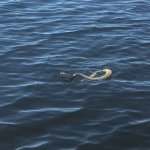

Stumbled across this older thread and thought I would share a few photos. This was on Seminoe reservoir in WY. We were over a half mile off shore, running on plane when my son shouted snake! I thought he must have been mistaken so we slowed and turned around, sure enough. Later that same year we had a garter snake come over the transom on Fort Peck, we still talk about what we might have done if it had been a rattler.

Gem Morris
Keeper of San Juan Secrets
Wow, he is really buoyant in that second picture


- Status
- Not open for further replies.