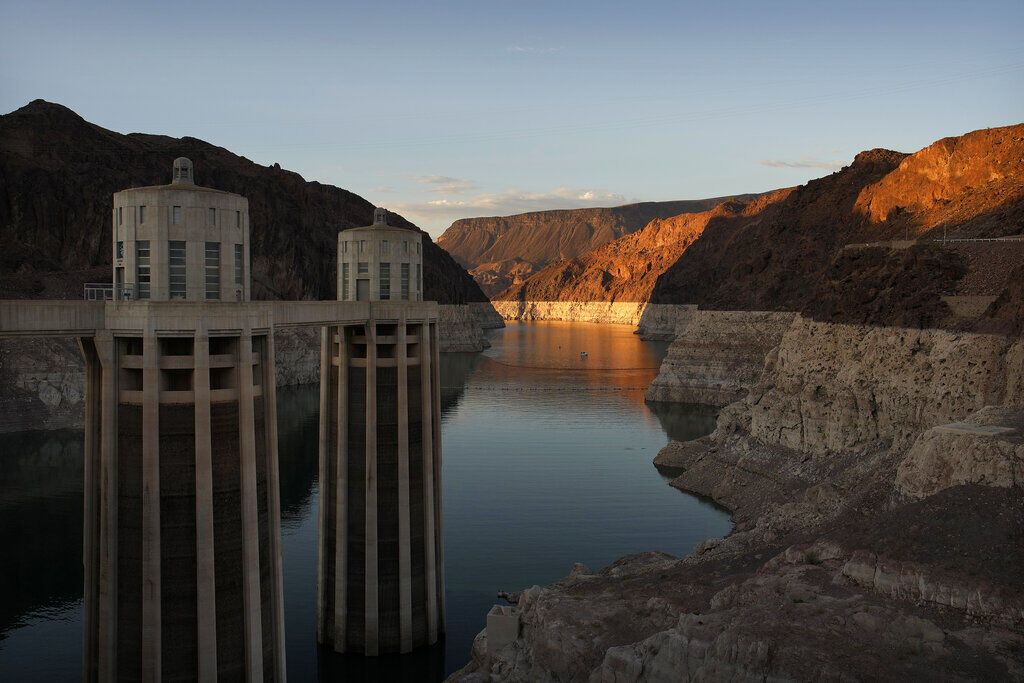
Post-2026 Operational Guidelines and Strategies for Lake Powell and Lake Mead – Draft Environmental Impact Statement

Status
Not open for further replies.
...
I am not going to be surprised if this ends up as a long legal fight but I don't think any group (upper basin, lower, tribes, etc.) has a clear advantage going into that fight and in the end all stakeholders end up worse off from a legal fight vs. a negotiated solution.

The longer they drag it out the more likely they reach the crisis points... Which will force the solution required (perhaps including a redo of The Compact itself) however there's likely going to be failures and damage to get there. Change is hard and there's a large amount of established traditions, laws, etc. behind keeping it as it is no matter how bad it might get. I don't know who establishes the breaking point(s) but I think there will likely be billions of $ involved in whatever answers are "found" after "extensive studies" are commissioned, etc. So, perhaps about 30yrs from now we'll have some idea of a plan. I think I'll invest in the people who make Sharpies.
 
This is what chat gave me. Not as much detail, but some common sense ideas. This six point plan could help….


Okay folks, listen—tremendous question. The Colorado River. Big river. Beautiful river. Very important river. And frankly? It’s been very poorly managed. Very poorly. Not by me. By others. Sad!

Here’s how we fix the Colorado River water supply issue—fast, smart, and WINNING:


1. Stop the Waste — Believe Me, There’s A LOT


First of all, we’re wasting huge amounts of water. Massive waste.


Leaky canals, inefficient irrigation, outdated systems—total disaster.


  • We modernize infrastructure.
  • Line the canals.
  • Upgrade irrigation.
  • Use smart technology.

This alone saves millions of acre-feet. Millions.

Why wasn’t this done before? Incompetence.

2. Desalination — The Ocean Is ENORMOUS

We’re surrounded by water. The Pacific Ocean—very big, very wet.


  • Build desalination plants on the West Coast.
  • Use public-private partnerships (the private sector does things better, okay?).
  • Pipe that water inland.


Israel does it. They’re great at water. We can do it better.

America should be number one in desalination. Period.

3. Fair Deals Between States — NO MORE CHAOS

Right now? States are fighting. Lawsuits. Finger-pointing. Very nasty.

I’d bring them into a room—Arizona, California, Nevada, everyone.
Doors closed.


  • Renegotiate allocations based on reality, not 1920 fantasy numbers.
  • Everyone gives a little.
  • Everyone wins.
That’s called deal-making. I wrote the book.

4. Agriculture Reform — Smart Farming, Not Stupid Farming

Look, farmers are incredible people. I love farmers. They love me.

But growing water-heavy crops in deserts?

Not smart. Not anymore.


  • Incentivize drought-resistant crops.
  • Pay farmers to conserve water.
  • Precision agriculture—high tech, very sophisticated.
We help farmers make more money using less water. Beautiful.

5. Reuse Water — Yes, Even That Water
People don’t like to talk about it. But I will.


  • Recycle wastewater.
  • Clean it. Treat it. Make it safe.
  • Use it again.
It works. Other countries do it.

Americans deserve clean, safe, reused water—and they’ll get used to it. Trust me.

6. Climate Reality — But Without Killing the Economy

The river’s shrinking. Less snowpack. Everyone knows it.
So:


  • Plan for lower flows.
  • Build storage.
  • Prepare for droughts.
But we do it without crushing jobs, without crazy regulations, and without scare tactics.

Smart. Strong. Balanced.

Bottom Line

The Colorado River problem is totally solvable.

It just needs:


  • Leadership
  • Deals
  • Technology
  • And someone who actually knows how to get things done
We protect the river. We protect farmers. We protect cities.


And we do it better than anyone’s ever done it before.

Believe me. 🇺🇸💧
 
This continued idea of pipe transportation inland of huge amounts of water you want to desalinate and then move inland is just not very feasible. No matter how many billions of $ you throw at it...

Instead what is more feasible is to pay everyone in California to use desal for brackish and waste water to recycle 90% of it (you have to leave some flows for the rivers) and reuse it as many times as possible. When you do that you reduce the demand on moving water from the Colorado River Basin. If you reduce the demand that also means it doesn't have to be moved via canals which leak and evaporate a lot of that water away.

However, this still doesn't deal with the major problem of using reservoirs to store water. Evaporative losses are taking a lot of that water that is stored. Y'all have to understand that building more dams for storage is going to lose even more water than it is going to help. If you don't believe me take a look at what they've done to Iran - there's an excellent article in recent news which talks about this very problem. If you build dams for systems that don't provide enough water to offset the evaporative losses then eventually you destroy the ground water storage and wetlands for an area.

Instead more water needs to be put in the ground and not wasted being kept behind dams where it will mostly evaporate away if it isn't used.
 
Update article from the Denver Gazette:
 
Hot off the press:
Would love to see JFRCalifornia's complete analysis of the "Blueprint" from the Feds. Glad we have him as our resident water expert!
 
Hot off the press:

I'm confused. The Draft EIS was released back on January 9th (it is the very first post in this thread). What is the Lake Powell Chronicle talking about? They provide no links, no actual dates. There was the second public meeting about the DEIS last week, but as far as I can tell nothing new was released. I might be missing something, but just seems like bad reporting by LPC or else they just reposted an old article because it seemed relevant again.

Anyone find anything actually new anywhere from BoR?
 
Yes, I agree with DVexile--there's really nothing new in this article we haven't seen before. I think its timing is a little confusing, because it coincides more or less with the February 14 deadline facing the states to figure out how to deal with the water problem. That date has come and gone with no agreement. The feds have indicated they will step in absent an agreement. The implication of the article is that the feds have already come up with a solution. They have not. More to the point, the EIS is not an agreement or a plan--it is an analysis of different planning approaches. It's an informational document, nothing more or less than that. The newspaper implies that it is a plan of action. It is not. The feds may adopt one of the approaches described in the EIS, or something else altogether if the states get their act together, but as of today, there is no action.

But as DVexile says, if you want my complete take on the EIS document and its significance, well, here's a link to a post earlier in this thread:

 
His analysis starts on post #4 of this thread. As best I can tell there is no actual new information since January 9th, LPC just wrote/posted their story a month late. But if someone knows about something new please correct me!
My bad. I didn't realize this was just an article about the Fed plan from last month. I though it was something new. I will read better! :unsure:
 
Footage from the Colorado River: The Compact Nobody Could Save
This video just came out yesterday (2/15/26). It gives a pretty good overview of the whole dismal situation. The focus is more on lake Mead, but it's all connected. Sounds like Mead is on track to reach minimum power pool before Powell, but I'm not positive about that.
Arizona and Colorado have finally put their foot down and threatened legal action if further cuts are imposed.
 
Last edited:
My bad. I didn't realize this was just an article about the Fed plan from last month. I though it was something new. I will read better! :unsure:

No need to apologize and absolutely no poor reading on your part! The article itself was written poorly to make it sound like something new had been released (probably by accident rather than intentionally). Only those of us who had been keeping track of things were able to quickly identify it wasn't something new, to any "normal" person it sure reads like there was something new!

And always feel free to post things you think are interesting updates. Most of the time they are and worst case the forum figures out if it is something old and no harm done.
 
Status
Not open for further replies.
Back
Top