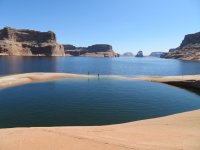
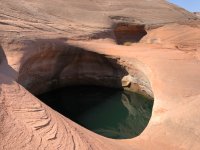
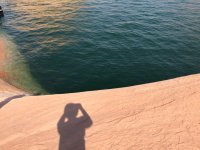
Of course, Hole in the Roof wasn’t really a huge attraction until the water dropped. Here’s my photos of it in August 2020, when the lake was at 3604. It was impossible to boat underneath at that time, and really was just a steep-sided pool that if you fell in, you’d have a hard time getting out. On that summer day, there wasn’t a boat for a half mile around, since there was no reason to go. It might have been a more attractive pool to swim in at about 3615-3620… much above that, it would have been under the lake…
People wonder why it fell. Well, it’s made from Navajo Sandstone, which is basically ancient hardened sand dunes that formed under the pressure of other deposits when there once was a huge lake over much of the SW millions of years ago, a feature long gone. After the whole Colorado Plateau uplifted, the Colorado River’s erosive power once again exposed those hardened dunes as it cut through them like a knife.
If you leave Navajo Sandstone in water long enough, it starts weakening, and the erosion forms sand—because that’s what it is! Add fluctuating lake levels, a little wave action from beneath, possibly spurred on by storms or boats, and you’ve got more erosion. People walking on top would be an insignificant factor unless… unless there was a thin weak seam in the first place… possible?
The best beaches at Lake Powell are made from Navajo Sandstone, because it’s fundamentally just sand.… and so are many of the best arches in the major national parks. And for that reason, they are all doomed to fall one day, possibly in the distant future, but eventually…


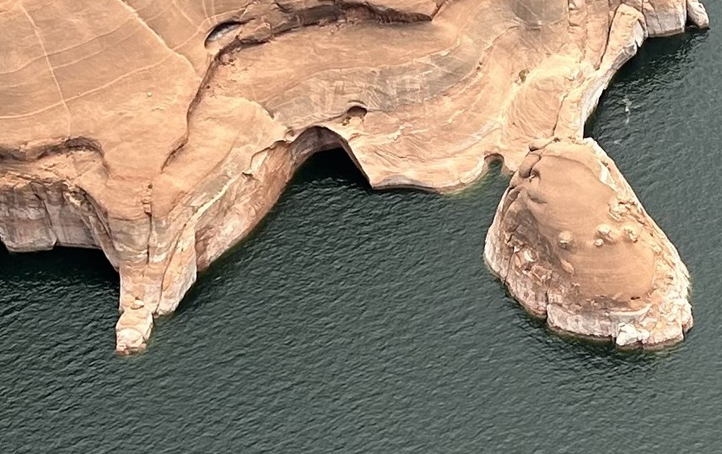
 www.nps.gov


 that no one was hurt.


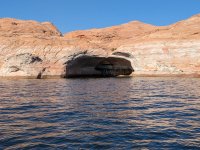
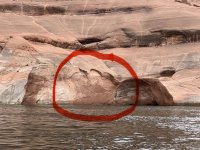

 That feature is also known as "Craig's Bathtub," or "Hepburn's Bathtub."