I too have seen them eating mussles off the wall. want some fun, bring a bow or snorkel with a spear. trust me it's worth the effort. I grew up on an Iowa farm eating Carp. smoked on Hickory in an old refrigerator. going to finally try on Mesquite as shore lunch. what's the worst that could happen?

You are using an out of date browser. It may not display this or other websites correctly.
You should upgrade or use an alternative browser.
You should upgrade or use an alternative browser.
Fishing being destroyed
- Thread starter striper stalker
- Start date
- Status
- Not open for further replies.

Rainbowbridge
Keeper of San Juan Secrets
Wayne, as our top fish expert & Guru......what are your feelings about the carp situation?


viking842000
Well-Known Member
There is a reason many of us do not even fish July-Sep... (honestly mid May-Mid Oct for me) Worst fishing of the year! It is way too hot. Water is way too warm. Lake is way too busy etc... Up until a month ago fishing reports were on fire as is such every year. This whole carp thing is absurd but also hilarious to read. There is nothing wrong with the lake only operator error for not adjusting to fish habits in declining water levels (once again the warmest water temps of the year lead to the slowest fishing of the year)...Just got back from the lake, actually made my first post from the lake and really frustrated. I average twice a month on the water and usually 3-4 days each time. I can’t imagine anyone hasn’t seen a difference this year. As I said earlier, carp numbers are way up and I’m not seeing any shad ripples. I do think it has been a windier than normal year so ripples are more difficult to see but still plenty of calm water see them. I never use to see the carp in the main channel like you see now. Basically schooling up like Striper boils. Carp are scavengers and I’m sorry they will eat anything they can get in their mouth. I haven’t seen actual numbers on it, but have heard that shad numbers are down. I do think the park needs to look at the carp as a problem.

fish&peace
Active Member
 yeh , what he said!
Dan Keller
UT DWR Fish Biologist
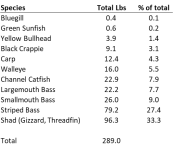
Common carp prefer waters with aquatic vegetation for food and cover, and use shallow, weedy areas for spawning. Lake Powell is a deep reservoir with significant temperature stratification. The colder, deeper layers are not suitable for carp, and the warmer shallow zones are limited or often too clear or rocky to support carp feeding and spawning. The lack of preferred habitat keeps carp numbers low; however, it’s reasonable to expect an increase during low water conditions that Lake Powell has experienced in recent years. Keep in mind, carp are easy to see when they come to the surface where oxygen is more concentrated, they are opportunistic feeders, they surface to eat floating insects or algae. Due to this behavior, we often see schools of carp, leading one to think that carp populations are increasing or dominate the lake, however you have to remember that for every carp you see on the surface there are thousands of fish under the water you can’t see. I looked at recent gillnet data to get an idea of how much total biomass carp represent. I found that on average carp make up around 4% of the total biomass. For example, here is a table showing biomass by species during 2024 gillnetting on the San Juan Arm. Carp made up 4.3% of the total 289 pounds of fish caught during our survey. As expected, shad and striped bass dominate the biomass. Gillnets tend to under estimate the biomass of small fish that hide in cover, such as bluegill and green sunfish, and overestimate biomass of fish that move around a lot, such as carp, so in reality the total biomass of forage fish (sunfish, threadfin shad) is greater than shown in the table and the total mass of carp is likely less. Carp do alter habitat and this can cause significant issues especially in shallow waters, but they are not a major ecological problem at Lake Powell. As others have said if the carp are a nuisance anglers can target them with a speargun or bow. Invasive species such as quagga mussels are by far more of a problem then common carp (in most cases) and you will notice that fact in how state and federal agencies spend limited time and resources. Thanks

Ryan
Keeper of San Juan Secrets
I would have given 5:1 odds against this. Thanks for weighing in.Carp made up 4.3% of the total 289 pounds of fish caught during our survey.

Dungee
Keeper of San Juan Secrets


gznokes
Well-Known Member
Dan as much as I enjoy reading the fishing reports I enjoy the scientific reports you and Wayne post more. Thank you!Common carp prefer waters with aquatic vegetation for food and cover, and use shallow, weedy areas for spawning. Lake Powell is a deep reservoir with significant temperature stratification. The colder, deeper layers are not suitable for carp, and the warmer shallow zones are limited or often too clear or rocky to support carp feeding and spawning. The lack of preferred habitat keeps carp numbers low; however, it’s reasonable to expect an increase during low water conditions that Lake Powell has experienced in recent years. Keep in mind, carp are easy to see when they come to the surface where oxygen is more concentrated, they are opportunistic feeders, they surface to eat floating insects or algae. Due to this behavior, we often see schools of carp, leading one to think that carp populations are increasing or dominate the lake, however you have to remember that for every carp you see on the surface there are thousands of fish under the water you can’t see. I looked at recent gillnet data to get an idea of how much total biomass carp represent. I found that on average carp make up around 4% of the total biomass. For example, here is a table showing biomass by species during 2024 gillnetting on the San Juan Arm. Carp made up 4.3% of the total 289 pounds of fish caught during our survey. As expected, shad and striped bass dominate the biomass. Gillnets tend to under estimate the biomass of small fish that hide in cover, such as bluegill and green sunfish, and overestimate biomass of fish that move around a lot, such as carp, so in reality the total biomass of forage fish (sunfish, threadfin shad) is greater than shown in the table and the total mass of carp is likely less. Carp do alter habitat and this can cause significant issues especially in shallow waters, but they are not a major ecological problem at Lake Powell. As others have said if the carp are a nuisance anglers can target them with a speargun or bow. Invasive species such as quagga mussels are by far more of a problem then common carp (in most cases) and you will notice that fact in how state and federal agencies spend limited time and resources. Thanks
View attachment 33383
Dan Keller
UT DWR Fish Biologist
I'm glad to hear that, I will be sure to report on what we find electrofishing in September, I think we will have some noteworthy findings this year.Dan as much as I enjoy reading the fishing reports I enjoy the scientific reports you and Wayne post more. Thank you!

Colin
Well-Known Member
For reference: Stories / Photos – Fresh Water World

svivian
Escalante-Class Member
- Status
- Not open for further replies.