

You are using an out of date browser. It may not display this or other websites correctly.
You should upgrade or use an alternative browser.
You should upgrade or use an alternative browser.
Boat towing
- Thread starter Tiffanyakin
- Start date
- Status
- Not open for further replies.

birdsnest
Keeper of San Juan Secrets
Once your sand anchor holes are dug or you have secured your anchor ropes around good rocks. walk the rope to the back deck(usually on top with the ropes on the outside of the bimini uprights. I always have the motors running during this process, just enough to keep the boat against the beach, usually idle speed unless windy. The captain will stay at the helm. Once the ropes are on the back deck, cleat each side as tight as possible. Now the trick. Turn the steering wheel to get the back of the boat to swing about 15 degrees. You will have to throttle up a little, maybe around 3000 rpm. Recleat the side that is loose now. Once recleated spin the wheel the other way and throttle up enough to get the boat straight on the beach or a little more cause it will straighten out when all the tight ropes get happy At this point the loose side will be recleated and the boat should be perpendicular to the beach and the ropes should be very tight as in tight rope walking tight. to really get the ropes good, when you ease into the beach under power you can swing the wheel back and forth with some power to "walk" the boat further into the beach. When the ropes get loose (they will with rising water) start the boat and turn the wheel each way with enough power to swing the back of the boat and recleat each side. No more knots, no more digging, no more rock untying and definitely no more wind moving the boat. Probably to wordy . Always know where your ropes are with the motors running and never wrap a rope around your hand under any circumstances or at any time. Fingers can become carp food. Hope you have a great time. BTW all the adults should know how to cleat a rope so it is easy to uncleat.
Last edited by a moderator:

Iceberg is VERY popular. Used to be one of our favorite spots, but you WILL have lots of neighbors. We took an early trip last year in early May and figured that early in the season Iceberg would be an option. WRONG; couldn’t believe how many boats went by every hourThanks for all the input this is for sure going to be an adventure. We keep referring to ourself as the Beverly Hillbillies with everyone’s toys in tow. Anyone have any input on Good Hope Bay or Iceberg? I think we were planning to stay more north. We’ve thrown around Halls Crossing but have kids and jet skis so we would prefer them not out in busy traffic.
Last edited by a moderator:
Tiffanyakin
Member
Thanks I’ll pass this along!Once your sand anchor holes are dug or you have secured your anchor ropes around good rocks. walk the rope to the back deck(usually on top with the ropes on the outside of the bimini uprights. I always have the motors running during this process, just enough to keep the boat against the beach, usually idle speed unless windy. The captain will stay at the helm. Once the ropes are on the back deck, cleat each side as tight as possible. Now the trick. Turn the steering wheel to get the back of the boat to swing about 15 degrees. You will have to throttle up a little, maybe around 3000 rpm. Recleat the side that is loose now. Once recleated spin the wheel the other way and throttle up enough to get the boat straight on the beach or a little more cause it will straighten out when all the tight ropes get happy At this point the loose side will be recleated and the boat should be perpendicular to the beach and the ropes should be very tight as in tight rope walking tight. to really get the ropes good, when you ease into the beach under power you can swing the wheel back and forth with some power to "walk" the boat further into the beach. When the ropes get loose (they will with rising water) start the boat and turn the wheel each way with enough power to swing the back of the boat and recleat each side. No more knots, no more digging, no more rock untying and definitely no more wind moving the boat. Probably to wordy . Always know where your ropes are with the motors running and never wrap a rope around your hand under any circumstances or at any time. Fingers can become carp food. Hope you have a great time. BTW all the adults should know how to cleat a rope so it is easy to uncleat.
Tiffanyakin
Member
Anywhere else you would recommend?Iceberg is VERY popular. Used to be one of our favorite spots, but you WILL have lots of neighbors. We took an early trip last year in early May and figured that early in the season Iceberg would be an option. WRONG; couldn’t believe how many boats went by every hour
There is a small alcove on the opposite side of the lake, just a little north that sometimes has room for a couple of boats. The Rincon is usually a good option, but it lacks the high canyon walls. Once you get past the Rincon there's not a lot of options till south of the Escalante. South of Escalante there's Ribbon, Cottonwood and Lewellyn
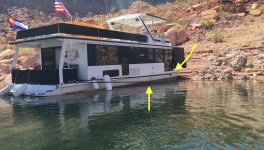
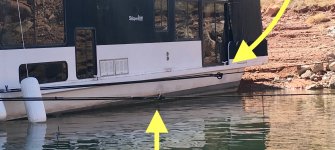
We use an alpine butterfly knot (scaled to size for HB anchor ropes) in the middle of the anchor lines. Works like a cum along, and we don't have to start the engines to tighten up the ropes, and we still get lines that are tightrope tight. After looping the rope around a LARGE boulder on shore, (we use a slip knot at the shore end) then, with someone holding the loose end at cleat, I swim out to the middle of the line and put in the alpine butterfly. While someone is still holding the loose end of the rope at the cleat, grab the cleat side of the rope and begin feeding the rope through the loop created by the alpine butterfly. Begin to pull the new loop toward the cleat, creating a massive loop. Once you reach the boat wrap the loop over the cleat and begin tightening from the loose end. You can also create the alpine butterfly and subsequent loop from the top deck - start new the front of the boat and walk the loop and loose end back to the clert.Thanks I’ll pass this along!
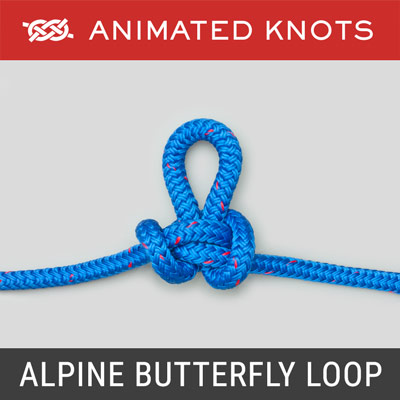
Alpine Butterfly Loop
The Alpine Butterfly Loop provides a secure loop in the middle of a piece of rope. Load can be safely applied: from the loop to either end of the rope; between the two ends with the loop hanging free; or to the loop with the load spread between the two ends.
 www.animatedknots.com
Make sure you have quality ropes for towing. The first boat in a chain tow has the highest pull force on its towing eye as it carries all the other tow forces in back of it. If the towed boat or vessel starts to yaw left and right, back and forth, a longer tow line is needed. Tow slow to reduce line pull forces. Turn slowly, stop slowly. Plan ahead when towing.
Forgot to add- Coast Guard regs require a deck hand to monitor the towed vessel at all time under tow on commercial tug boats. There are many reports (right here on Lake Powell) of towed vessels going missing with only a broken tow rope dragged behind the boat when they arrive at their beach 3 or 4 hrs later. Some are found, some are not, some sunk and broke the line never to be seen again. A watch keeper for the towed vessel is a good thing.
- Status
- Not open for further replies.