
You are using an out of date browser. It may not display this or other websites correctly.
You should upgrade or use an alternative browser.
You should upgrade or use an alternative browser.
Seeing 💚
- Thread starter SeaLegs
- Start date



210 FSH
Well-Known Member
Looking at some of the weather reports for the upstream watershed shows forecasted rain and snow mix … it all helps.
 forecast.weather.gov

National Weather Service

Dorado
Keeper of San Juan Secrets
Thank goodness, the pattern has changed! It is crazy warm for sure. Here in the upper Green (above Fontenelle Reservoir) we barely have any valley snow… And every day is close to a record high. But in the mountains, it is falling as snow. Strangely enough, we are actually above average for snowpack. Which is pretty crazy considering how bad this fall and winter has been! Seven day forecast has quite a bit of precipitation as well…


ndscott50
Well-Known Member
I have been trying to not look at the data as its very concerning. The Upper Green is the one bright spot at 110% of normal. The rest are between not good and record not good.
UPPER GREEN RIVER 110%
DUCHESNE RIVER BASIN 72%
YAMPA/WHITE RIVER BASINS 63%
PRICE-SAN RAFAEL 38%
ESCALANTE RIVER BASINS 87%
DIRTY DEVIL RIVER BASIN 45%
UPPER COLORADO RIVER HEADWATERS 53%
ROARING FORK RIVER BASIN 49%
SOUTH EASTERN UTAH 45%
GUNNISON RIVER BASIN 52%
DOLORES/SAN MIGUEL RIVER BASINS 53%
SAN JUAN RIVER HEADWATERS 46%
ANIMAS RIVER BASIN 43%
COLORADO RIVER BASIN ABOVE LAKE POWELL (TOTAL OF ALL SNOTEL SITES) 63%
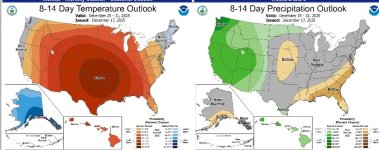
The current two week GFS model shows some moisture, between a 1/2 an inch to 2 inches in a few areas. At best that is enough to maintain these percentages. For perspective on how far behind we are, and how much two inches of liquid will help (or not really help in this case), here are some example snotel sites.
Schofield Pass (Mountains north of Crested Butte): Current 4.7 inches, Median 11.4 inches, Difference -6.7 inches
Vail Mountain: Current 2.9 inches, Median 6.6 inches, Difference -3.7 inches
Tower (Above Steamboat): Current 10.5 inches, Median 15.2 inches, Difference -4.7 inches
Wolf Creek Summit: Current 5.3 inches, Median 12.8 inches, Difference -7.5 inches
Note that this time of year Schofield Pass, Tower and Wolf Creek need about 2 inches of liquid every two weeks to break even relative to average. Vail needs about an inch. I am just not seeing the big storms we need to make up ground in the current outlook. Sorry to be all doom and gloom but this winter is trending very badly.
UPPER GREEN RIVER 110%
DUCHESNE RIVER BASIN 72%
YAMPA/WHITE RIVER BASINS 63%
PRICE-SAN RAFAEL 38%
ESCALANTE RIVER BASINS 87%
DIRTY DEVIL RIVER BASIN 45%
UPPER COLORADO RIVER HEADWATERS 53%
ROARING FORK RIVER BASIN 49%
SOUTH EASTERN UTAH 45%
GUNNISON RIVER BASIN 52%
DOLORES/SAN MIGUEL RIVER BASINS 53%
SAN JUAN RIVER HEADWATERS 46%
ANIMAS RIVER BASIN 43%
COLORADO RIVER BASIN ABOVE LAKE POWELL (TOTAL OF ALL SNOTEL SITES) 63%
The current two week GFS model shows some moisture, between a 1/2 an inch to 2 inches in a few areas. At best that is enough to maintain these percentages. For perspective on how far behind we are, and how much two inches of liquid will help (or not really help in this case), here are some example snotel sites.
Schofield Pass (Mountains north of Crested Butte): Current 4.7 inches, Median 11.4 inches, Difference -6.7 inches
Vail Mountain: Current 2.9 inches, Median 6.6 inches, Difference -3.7 inches
Tower (Above Steamboat): Current 10.5 inches, Median 15.2 inches, Difference -4.7 inches
Wolf Creek Summit: Current 5.3 inches, Median 12.8 inches, Difference -7.5 inches
Note that this time of year Schofield Pass, Tower and Wolf Creek need about 2 inches of liquid every two weeks to break even relative to average. Vail needs about an inch. I am just not seeing the big storms we need to make up ground in the current outlook. Sorry to be all doom and gloom but this winter is trending very badly.
ndscott50
Well-Known Member
I took a first look at the runoff forecast for Powell at CBRFC. This is the projected April 1 to July 31 forecast. Official forecast don't start to January but the ESP (Ensemble Streamflow Prediction Model) starts running on 12/15. Note this model takes current basin conditions (observed snowpack & soil moisture) and then assumes historical normal future weather to generate an expected runoff. The current forecast is 3.806 maf. (Average years is 6.4 maf). Here is the last ten years of the 12/15 prediction vs. the actual

Good news is that in half the years the actual ended up higher than the 12/15 prediction. Bad news is the current 3.806 maf prediction is the second lowest over the last ten years. 2021 was the lowest and that year turned out really bad.
2019 offers the best example of hope. On 12/15 it had the forth lowest predicted runoff of the ten years shown. Though not nearly as poor as this year, the snowpack was significantly below normal until a mid January storm cycle brought it up to normal. It stayed normal until mid February when it really started snowing and we ended up with a very good year - second highest runoff of the last ten years.
Good news is that in half the years the actual ended up higher than the 12/15 prediction. Bad news is the current 3.806 maf prediction is the second lowest over the last ten years. 2021 was the lowest and that year turned out really bad.
2019 offers the best example of hope. On 12/15 it had the forth lowest predicted runoff of the ten years shown. Though not nearly as poor as this year, the snowpack was significantly below normal until a mid January storm cycle brought it up to normal. It stayed normal until mid February when it really started snowing and we ended up with a very good year - second highest runoff of the last ten years.

Trix
Keeper of San Juan Secrets
There are many articles describing the current wobbly polar vortex and the chaotic weather it will bring to the northern hemisphere this winter. One report described it as chaos not seen in decades, powerful and unpredictable. But it’s going to be cold and snowy somewhere. Hope it’s the Rockies and not Siberia.
All I can say at this point is that it is early enough in the season that I don't think predictions are going to be that reliable (unless you say it is going to be unreliable  )...
)...
I'm hoping this current storm lands squarely in UT & CO... Looks like a monster at the moment (looks to be aiming more north ).
).
)...I'm hoping this current storm lands squarely in UT & CO... Looks like a monster at the moment (looks to be aiming more north
).
RichieW13
Well-Known Member
In southern California we've gotten 3 inches today already. Hopefully the storm heads that way.All I can say at this point is that it is early enough in the season that I don't think predictions are going to be that reliable (unless you say it is going to be unreliable
I'm hoping this current storm lands squarely in UT & CO... Looks like a monster at the moment (looks to be aiming more north
Some has made it further inland but nothing like what has been hitting there:
This is just one reservoir:
 cdec.water.ca.gov
which hit almost 90,000cfs.
This is just one reservoir:
CDEC Web Applications
Water in California is a complex topic. Managing water resources sustainably requires an integrated approach, as water flows across many lines and impacts every Californian. Learn the water basics for better understanding of our programs and the issues related to our work.
cdec.water.ca.gov
which hit almost 90,000cfs.

Marina Bum
Escalante-Class Member
I enjoy all the data and respect folks who have the capacity to gather it and extrapolate on it. I miss the days when I could just relax about the lake over the winters and just wonder “how full” Lake Powell would end up instead of how empty it could be. This year is a critical one to see just how far the infrastructure can be stretched and if we see the lake drop much further it will be challenging for sure.
Here in Flagstaff (not part of the basin watershed above Powell) we started out with a couple of nice snow storms that got our ski resort fully open but we just experienced several days of warm rain which washed a lot of the snow away. Now they are closing trails left and right and the lower lodges and terrain had to be shut down entirely. Since that early big storm it’s been unseasonably warm here for weeks, we’ve been setting records. Flagstaff and Page have seen calm blue sky days with temps in the 60’s and Phoenix has been in the 80’s.
NDScott50 pointed to 2019 which I remember well. The snow came late and big that year and at Wahweap Marina the large lake rise took a lot of us by surprise. We had good conditions for a productive runoff that year, snowpack is only part of the story. The dirt lot with the blue awning half way up Wahweap Ramp almost went under water, now it sits 50 feet or so above the waterline.
I don’t feel like this is just another what if and what are we going to get game like we all enjoy wondering through every winter here on Wayne’s Words. I think it’s more of a critical inch kind of year given how low the lake levels already are. I see the charts and If we only get an inflow of 3.8 that won’t be good. BOR is going to have their hands full if it comes to that trying to manage the situation. I think with them their priority would have to be about keeping Meade above dead pool so they can keep getting water downstream to critical infrastructure.
I just feel that if Powell ever drops below Power Pool it’s going to be a game changer here for recreation as we’ve known it because much of the infrastructure we’ve all come to rely on would be high and dry at that point. If the 2026 inflow is poor then the next year 26/27 could see things change a lot. That’s why this year is critical. Here’s hoping for a big huge last 2/3rds of snow season and a wet rainy spring.
Here in Flagstaff (not part of the basin watershed above Powell) we started out with a couple of nice snow storms that got our ski resort fully open but we just experienced several days of warm rain which washed a lot of the snow away. Now they are closing trails left and right and the lower lodges and terrain had to be shut down entirely. Since that early big storm it’s been unseasonably warm here for weeks, we’ve been setting records. Flagstaff and Page have seen calm blue sky days with temps in the 60’s and Phoenix has been in the 80’s.
NDScott50 pointed to 2019 which I remember well. The snow came late and big that year and at Wahweap Marina the large lake rise took a lot of us by surprise. We had good conditions for a productive runoff that year, snowpack is only part of the story. The dirt lot with the blue awning half way up Wahweap Ramp almost went under water, now it sits 50 feet or so above the waterline.
I don’t feel like this is just another what if and what are we going to get game like we all enjoy wondering through every winter here on Wayne’s Words. I think it’s more of a critical inch kind of year given how low the lake levels already are. I see the charts and If we only get an inflow of 3.8 that won’t be good. BOR is going to have their hands full if it comes to that trying to manage the situation. I think with them their priority would have to be about keeping Meade above dead pool so they can keep getting water downstream to critical infrastructure.
I just feel that if Powell ever drops below Power Pool it’s going to be a game changer here for recreation as we’ve known it because much of the infrastructure we’ve all come to rely on would be high and dry at that point. If the 2026 inflow is poor then the next year 26/27 could see things change a lot. That’s why this year is critical. Here’s hoping for a big huge last 2/3rds of snow season and a wet rainy spring.
Last edited: